

The smell of singed desert ironwood is something you never forget; it is a heady mix of toasted vanilla and ancient earth. When you are Fitting a Hidden Tang Knife, you are not just shoving metal into a hole; you are orchestrating a marriage between high-carbon steel and organic fiber. You can feel the vibration of the blade through your fingertips as you test the initial fit. The steel is cold, unforgiving, and perfectly smooth, while the wood grain feels like a map of a thousand years. This process is the ultimate test of patience and precision. You are working with a hidden tang, which means the structural backbone of your tool is completely encased within the grip. This creates a sleek, ergonomic profile that feels like an extension of your own hand. If you get the physics wrong, the blade will wobble or, worse, the wood will split under the stress of a heavy swing. We are aiming for a vacuum-sealed fit that relies on surface tension and chemical bonding to stay forever frozen in time.
THE STUDIO KIT
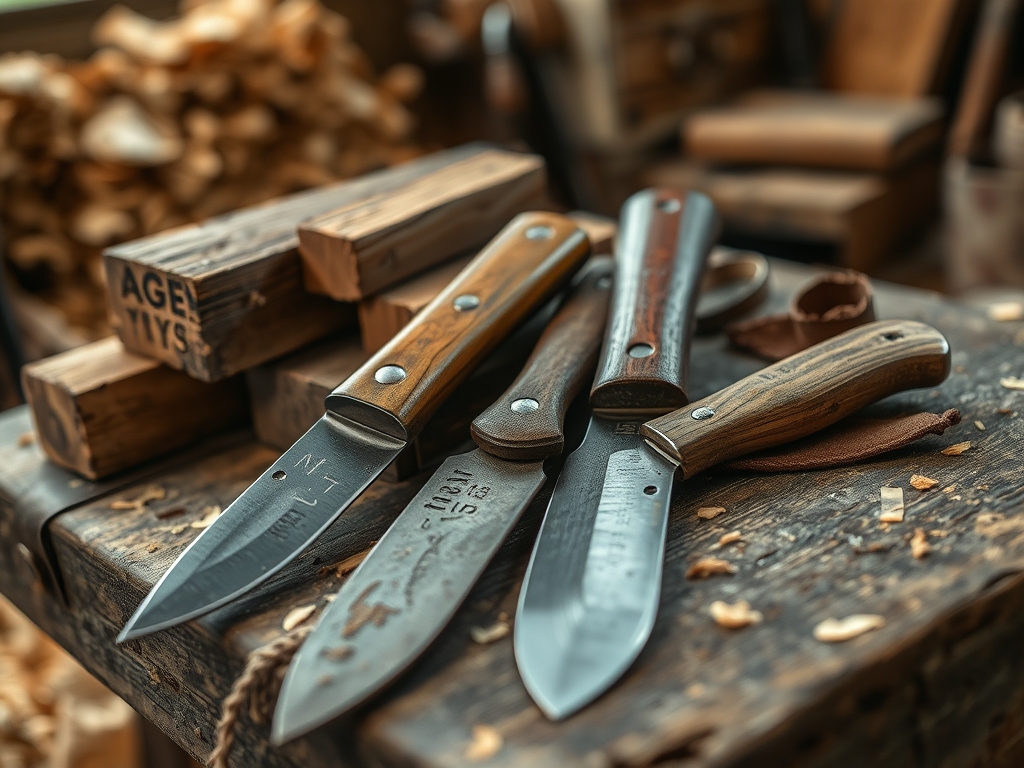
To master this build, your workbench needs to look like a cross between a laboratory and a woodshop. You will need digital calipers to measure the tang thickness down to the thousandth of an inch. A set of needle files is non-negotiable for shaping the interior of the handle slot. For the boring process, a long-reach drill bit is essential, but you should also have a jeweler's saw on hand for fine-tuning the entry point where the guard meets the bolster. Your adhesive of choice should be a slow-cure marine-grade epoxy, which offers superior tensile strength compared to five-minute varieties.
If you are looking for Material Substitutions, you can swap traditional hardwoods for stabilized burl or even high-density polyethylene (HDPE) if you want a modern, waterproof finish. If you do not have a dedicated tang-slot drill, a series of small pilot holes followed by a heated "burn-in" tang can work, though it requires extreme ventilation to manage the smoke. Always keep a bone folder or a smooth scrap of brass nearby to burnish any leather spacers you might include in the stack.
THE TEMPO
The "Maker's Rhythm" is all about respecting the cure times. You cannot rush a hidden tang. The initial shaping and drilling phase usually takes about two hours of intense, focused labor. This is followed by the "dry fit" stage, which can take another hour of micro-adjustments with your needle files. Once you move to the glue-up, you are at the mercy of the epoxy. I recommend a full twenty-four-hour cure cycle before you even think about the final shaping. If you try to grind the handle while the epoxy is still "green" or rubbery, the heat from the friction will liquefy the bond and ruin your alignment. Total active project time is roughly five to six hours, spread across two days.
THE CORE METHOD
1. Mapping the Internal Cavity
Before you touch a drill, you must trace the tang onto the side of your wood block. Use a fine-point scribe to mark the exact depth and taper. The tang is rarely a perfect rectangle; it usually tapers toward the pommel. By mapping this out, you ensure that you do not drill through the side of your handle material.
Mastery Tip: Understanding structural integrity means realizing that the wood fibers surrounding the tang act as a compression sleeve. If your hole is too large, you rely entirely on the epoxy, which is brittle. A tight wood-to-metal fit ensures the wood absorbs the shock of impact.
2. Boring the Pilot Channel
Secure your handle block in a padded vise. Using a bit slightly thinner than the tang thickness, drill a series of holes in a straight line. This creates a "web" of wood that you will later remove. Keep your drill speed moderate to avoid scorching the interior, which can create a layer of carbon that prevents epoxy adhesion.
Mastery Tip: This step relies on capillary action. When you eventually add the epoxy, the rough interior walls created by the drill bit provide more surface area for the resin to "climb" and grip, creating a mechanical lock.
3. Clearing the Slot with Needle Files
This is the most tactile part of the process. Use your needle files to rasp away the wood between your pilot holes. You are aiming for a slot that allows the tang to slide in with just a whisper of resistance. If you have to hammer it in, the wood will likely develop a stress fracture later.
Mastery Tip: Use your calipers constantly. Check the width of the tang at the shoulders versus the tip. A perfectly tapered slot prevents "pivot points" where the blade could snap under lateral pressure.
4. The Dry Fit and Alignment
Slide the blade, guard, and spacers onto the tang. Check for gaps. If you see light between the guard and the wood, the face of the block is not square. Use a sanding block to true the face until the fit is seamless.
Mastery Tip: This is about parallelism. If the face of your handle is even one degree off, the blade will appear "crooked" relative to the grip. Use a machinist's square to verify the 90-degree relationship between the blade spine and the handle face.
5. The Final Epoxy Bond
Mix your epoxy thoroughly. Coat the tang and fill the handle cavity about halfway. Slowly insert the tang, allowing air bubbles to escape. Use a clamp to apply longitudinal pressure, squeezing the stack together until a small amount of "squeeze-out" appears at the seams.
Mastery Tip: Observe the surface tension of the epoxy. If it beads up and rolls off the steel, the metal is too oily. Always degrease your tang with acetone immediately before assembly to ensure a molecular bond.
THE TECHNICAL LEDGER
Maintenance & Longevity: To keep your hidden tang secure, avoid extreme temperature swings. Rapid expansion and contraction of the metal can break the epoxy bond over time. Periodically treat the wood with tung oil to keep it from drying out and shrinking away from the bolster.
Material Variations:
- Sustainable: Reclaimed oak or maple from old flooring offers incredible density.
- Recycled: Micarta made from old denim provides a high-grip, industrial aesthetic.
- Premium: Desert Ironwood or Bog Oak (carbon-dated wood) offers the highest natural rot resistance.
The Correction:
- The Gap: If a gap appears at the guard after gluing, mix wood dust from your project with a drop of epoxy to create a matching "fillet" to plug the void.
- The Wobble: If the blade is loose after the glue dries, you likely had an air pocket. Drill a tiny hole in an inconspicuous spot, inject fresh epoxy with a syringe, and re-clamp.
- The Off-Center Blade: If the blade is tilted, you can sometimes "heat-treat" the handle with a heat gun to soften the epoxy just enough to nudge the blade back into alignment before it re-sets.
Studio Organization: Store your unfinished handles in a climate-controlled environment. Wood is porous and will absorb humidity, changing its dimensions. Keep your epoxy resins in a dark, cool drawer to prevent premature crystallization.
THE FINAL REVEAL
There is nothing quite like the moment you take the clamps off and feel that solid, singular weight in your hand. What was once a disparate collection of steel, wood, and brass has become a unified tool. The balance point should sit right at the guard, making the knife feel light and nimble despite its strength. When you polish that wood and see the grain pop against the mirrored steel, you are seeing the result of perfect physics and a lot of heart. You did not just make a knife; you engineered a legacy piece.
STUDIO QUESTIONS
How do I know if the tang is deep enough?
The tang should extend at least two-thirds of the way into the handle. This ensures the tensile strength of the wood supports the leverage exerted on the blade during heavy use.
Can I use wood glue instead of epoxy?
No. Wood glue is designed for porous-to-porous bonds. It will not adhere to the smooth, non-porous surface of the steel tang, leading to eventual blade failure and slippage.
Why did my handle split during the dry fit?
The slot was likely too narrow for the gauge of the steel. Forcing a tapered tang into a straight hole creates internal pressure that follows the wood grain until it shears.
What is the best way to clean epoxy squeeze-out?
Wait until the epoxy reaches a "leathery" stage, then use a sharpened brass scraper to peel it away. This avoids smearing liquid resin into the porous grain of the wood.