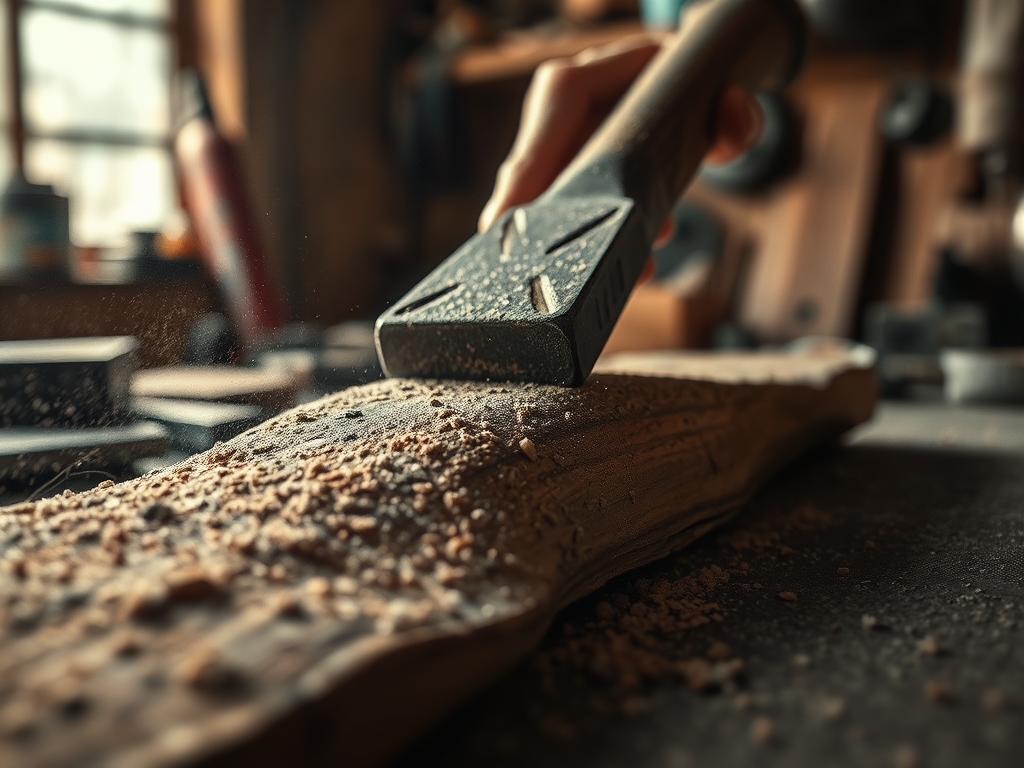
Close your eyes and run your fingertips across a piece of raw black walnut. Can you feel that slight, fuzzy resistance? That is the lignin and cellulose fibers standing at attention, waiting for a transformation that a machine simply cannot provide. When I talk about Sanding Wood Without Electricity, I am not just being a luddite; I am chasing a specific, high-end tactile feedback that a vibrating orbital sander obliterates. Power tools are great for bulk removal, but they introduce "chatter marks" and heat friction that can actually glaze the wood pores shut. By choosing to sand by hand, you are engaging in a physical dialogue with the material. You feel the exact moment the grain transitions from coarse to glass-like. It is about the intimacy of the craft and the structural integrity of the surface. We are looking for a finish so smooth it feels almost liquid, achieved through patience and a deep understanding of porous cell structures. Grab your favorite apron because we are about to get dusty and incredibly precise.
THE STUDIO KIT
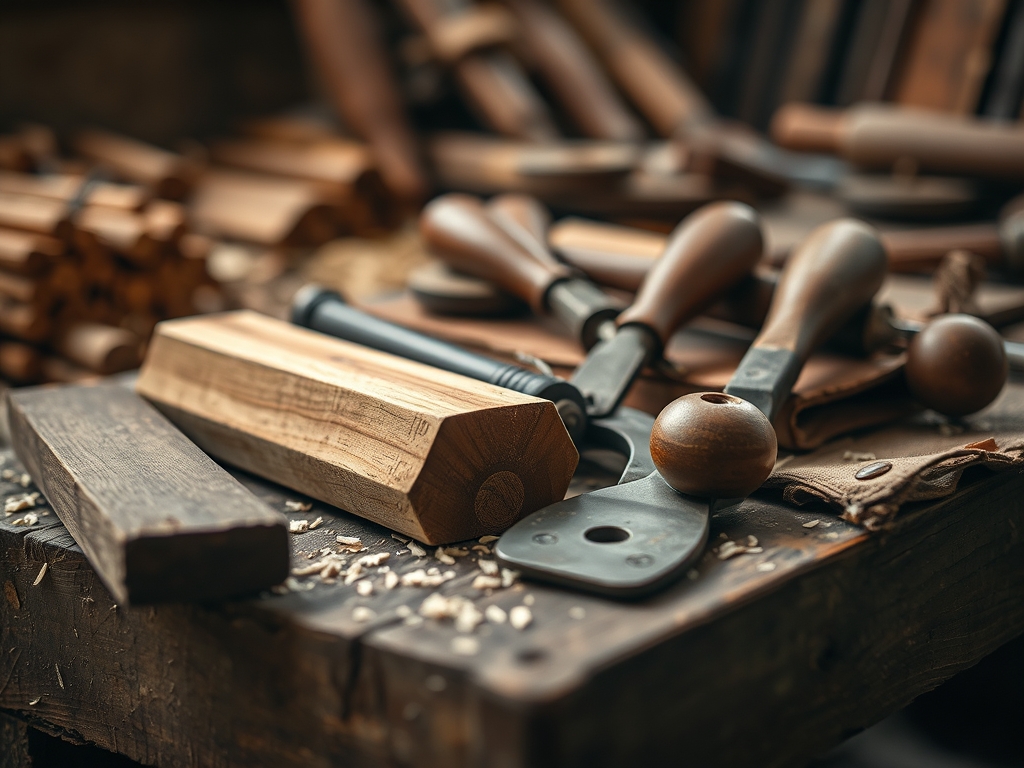
To master this process, your kit needs to be a curated collection of abrasives and ergonomic supports. We start with a high-quality abrasive paper range, typically starting at 80-grit for shaping and moving up to 400-grit for that buttery final touch. You will need a cork sanding block; the slight "give" of cork distributes pressure more evenly than plastic, preventing you from over-sanding the softer springwood while leaving the harder summerwood ridges high. I also keep a digital caliper nearby to monitor the thickness of the board, ensuring I do not accidentally create a taper in the wood.
For intricate curves, a burnisher or a set of card scrapers is essential. A card scraper is basically a piece of high-carbon steel that you "hook" with a burnishing rod to create a microscopic cutting edge. It removes shavings rather than dust, which is a game changer for tensile strength at the surface level.
Material Substitutions: If you lack a professional cork block, a scrap piece of rigid insulation foam or even a flat offcut of plywood wrapped in leather works beautifully. If you run out of high-grit paper, you can actually use a brown paper grocery bag to burnish the wood. The silica content in the paper acts as an ultra-fine abrasive, roughly equivalent to 1000-grit, providing a soft luster without removing any more material.
THE TEMPO
Hand sanding is not a race; it is a Maker's Rhythm. You should allocate approximately twenty minutes per grit level for every square foot of surface area. This tempo allows the wood fibers to settle between passes. When you use a machine, the high-speed friction generates heat that can soften the natural resins in the wood, leading to "clogging" on your sandpaper. By slowing down, you maintain a cool surface temperature, which keeps the capillary action of the wood cells open for better oil absorption later. Think of the first stage as the "Correction Phase," the middle grits as the "Refinement Phase," and the final high-grit pass as the "Polishing Phase." It is a meditative cycle of stroke, wipe, and inspect.
THE CORE METHOD
1. Mapping the Grain Direction
Before you even touch the paper to the wood, you must identify the grain orientation. Sanding across the grain creates microscopic "valleys" that catch the light and ruin your finish. Always sand parallel to the longitudinal fibers. Use a bright raking light held at a low angle to highlight any existing mill marks or scratches.
Mastery Tip: Wood is essentially a bundle of straws. If you sand against the grain, you are crushing those straws rather than slicing them. Maintaining grain alignment preserves the structural integrity of the surface cells, ensuring they reflect light uniformly.
2. The Progressive Grit Climb
Start with your coarsest grit to level the surface. As you move from 80 to 120, then 180 and 220, you are essentially replacing large scratches with smaller ones. Never skip a grit! If you jump from 100 to 220, the finer paper will never be able to reach the bottom of the deep canyons left by the 100-grit.
Mastery Tip: Use a "pencil trace" method. Lightly scribble over the entire surface with a soft lead pencil. Once the pencil marks are completely gone, you know you have successfully sanded the entire area to that specific grit level. This prevents uneven ply thickness across the board.
3. Raising the Grain with Hydration
Between your final two grits, lightly mist the wood with distilled water using a spray bottle. This causes the compressed wood fibers to swell and stand up. Once the wood is dry, sand it one last time with your highest grit. This prevents the wood from feeling "fuzzy" later when you apply a water-based finish.
Mastery Tip: This technique utilizes hygroscopy. By forcing the fibers to stand up and then shearing them off, you create a surface that stays smooth even in high humidity. It is a professional secret for a "glass-like" finish that lasts.
THE TECHNICAL LEDGER
Maintenance & Longevity: Your sanding blocks must be kept perfectly flat. If a block becomes rounded at the edges, it will "dub" the corners of your workpiece, ruining the crisp lines. Store your sandpaper in a climate-controlled environment; high humidity can cause the adhesive backing to fail or the grit to "shed" prematurely.
Material Variations:
- Sustainable: Reclaimed oak requires more initial "leveling" due to its density and potential checking.
- Premium: Exotic woods like Ebony or Cocobolo have high oil content, which can "gum up" sandpaper. You may need to wipe these with acetone before sanding.
- Recycled: Old pallet wood often contains silica or grit from its previous life; use a wire brush first to clear the surface before wasting your good sandpaper.
The Correction:
- Sanding "Dips": If you sand too long in one spot, you create a hollow. Fix this by sanding the surrounding areas with a long "jointer" sanding block to level the entire plane.
- Pigtail Swirls: These usually come from leftover debris. Wipe the surface with a tack cloth between every single grit change to remove stray abrasive particles.
- Glazed Pores: If the wood looks shiny but feels rough, you have likely burnished it with dull paper. Switch to a fresh sheet immediately to "open" the cells back up.
Studio Organization: Store your sandpaper in a labeled accordion file by grit. Keep your "work in progress" wrapped in a clean cotton sheet or "breather" cloth to prevent dust from settling into the open pores between sessions.
THE FINAL REVEAL
There is nothing quite like the moment you wipe away the final dusting of 400-grit debris to reveal a surface that glows from within. By avoiding the vibration of a machine, you have preserved the crispness of the wood's natural "chatoyancy," that cat-eye effect where the wood shifts in the light. Your piece does not just look finished; it feels intentional. Every stroke of your hand has contributed to a surface that is technically superior and emotionally resonant. It is a masterpiece of friction and finesse.
STUDIO QUESTIONS
Does hand sanding take longer than power sanding?
Yes, significantly. However, hand sanding eliminates the time spent fixing machine-induced swirl marks and heat damage. It provides a superior tactile finish that machines cannot replicate, making the extra time a valuable investment in quality.
What is the best way to sand tight corners?
Use a custom-shaped "sanding stick" or a jeweler's saw blade wrapped in abrasive paper. For tiny crevices, a bone folder wrapped in fine-grit paper allows you to apply targeted pressure without rounding over your sharp internal edges.
Can I sand wood that has already been oiled?
You can, but the oil will quickly "clog" the sandpaper. It is better to use a cabinet scraper to remove the top layer of finish before returning to traditional abrasives to ensure the wood cells remain open.
How do I know when to change my sandpaper?
If the paper feels smooth to the touch or if you notice you are pressing harder to get results, the grit is spent. Using dull paper generates excess heat and burnishes the wood rather than cutting the fibers cleanly.