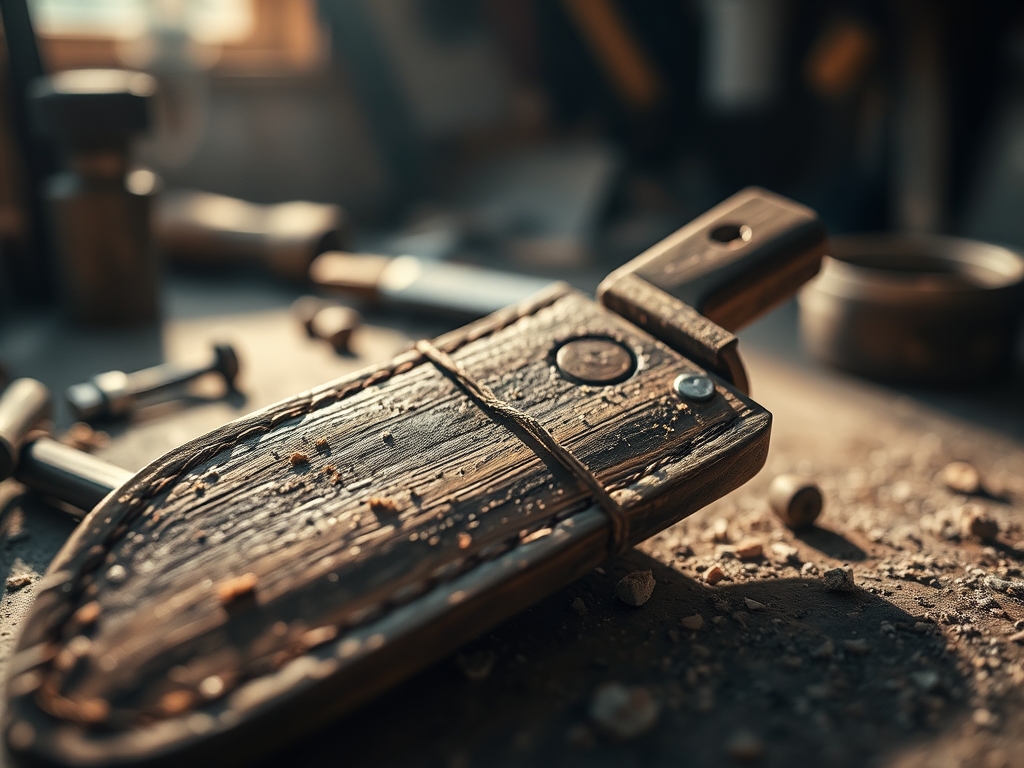
Imagine the smell of fresh vegetable tanned leather hitting your senses as you unroll a heavy shoulder hide. It is earthy, musky, and full of potential. There is a specific, grounding weight to a high quality blade, but it is nothing without its home. Hand Stitching a Sheath is the ultimate test of patience and precision for any maker. You are not just making a pocket; you are engineering a structural vacuum that keeps steel safe and silent. When you run your thumb along the grain of a seven ounce leather piece, you are feeling the collagen fibers that provide the tensile strength needed to resist a sharpened edge. We are moving beyond basic craft into the realm of functional art. This process requires a deep understanding of how organic materials respond to pressure and moisture. You want that satisfying click when the knife seats home. That sound is not an accident. It is the result of perfect geometry and a relentless focus on the physics of the stitch. Let us get into the grit of it.
THE STUDIO KIT
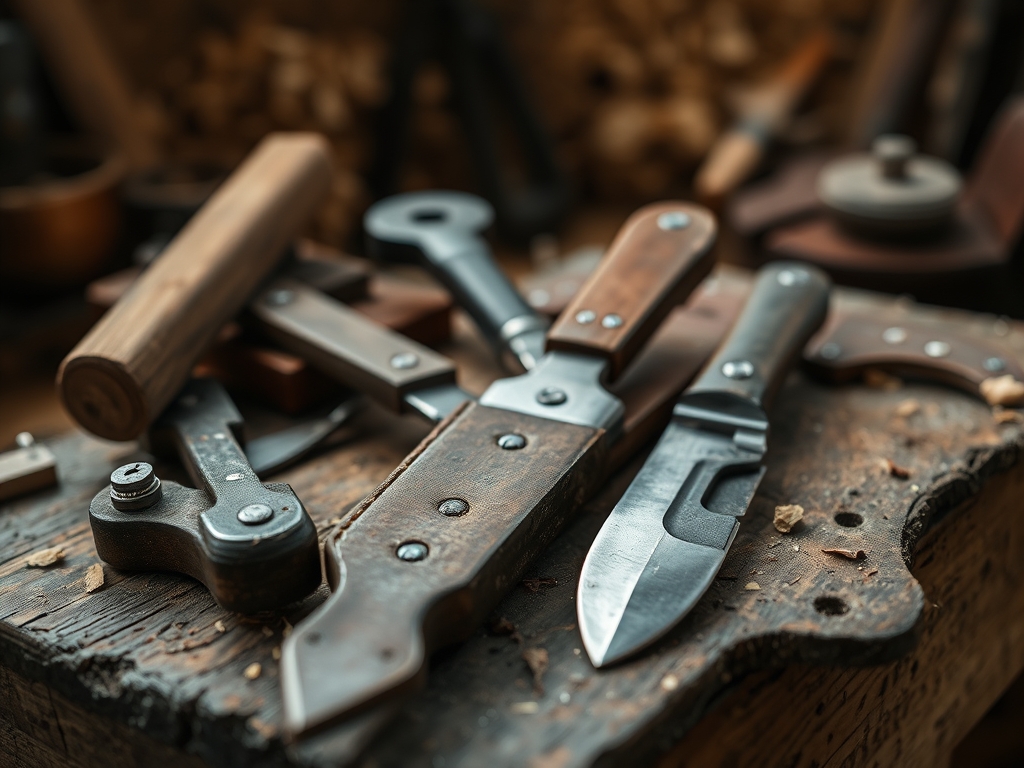
To master this build, your bench needs to be a shrine to precision. We start with Vegetable Tanned Cowhide, specifically a 7 to 9 ounce weight. This thickness ensures the sheath has enough structural integrity to hold its shape without collapsing under the pressure of a belt. You will need a Diamond Awl for piercing the leather; the diamond shape is crucial because it creates a slit that closes around the thread rather than a round hole that weakens the material.
Our thread of choice is Ritza Tiger Thread, a braided polyester that is flat and pre-waxed. Because it is braided rather than twisted, it will not unravel if one ply is nicked. You will also need a pair of Harness Needles with blunt tips to avoid piercing the thread during the saddle stitch. For the edges, a Steel Edger and a Wood Burnisher are non-negotiable.
Material Substitutions: If you cannot source traditional cowhide, Kangaroo Leather offers incredible tensile strength at a thinner gauge, making it perfect for intricate welts. If you lack a professional burnishing compound, a simple mixture of Beeswax and Distilled Water creates enough friction to seal the leather fibers through heat and pressure.
THE TEMPO
The "Maker's Rhythm" is a real psychological state where your heart rate syncs with the pull of the thread. Expect to spend about six hours on a standard fixed blade sheath. The first ninety minutes are dedicated to the Template and Cut, where your calipers and rotary cutter do the heavy lifting. The next two hours involve Edge Preparation and Gluing, which requires a steady hand and a lot of patience while the contact cement reaches its "tack" phase.
The final two and a half hours are the Stitching and Finishing marathon. This is the most meditative part. You are performing a repetitive, high tension movement that requires consistent muscle memory. If you rush the stitch, the tension will be uneven, causing the leather to pucker or the seam to wave. Respect the tempo; the leather remembers every mistake you make when you are in a hurry.
THE CORE METHOD
1. Patterning and the Welt
First, trace your blade onto a manila folder, adding a half inch margin for the stitch line. The most critical component is the Welt, a thin strip of leather placed between the two main layers. This prevents the sharp edge of the knife from cutting through your stitches. Use your Calipers to ensure the welt is exactly the same thickness as the blade spine.
Mastery Tip: This is about Lateral Compression. By matching the welt thickness to the spine, you create a uniform internal cavity that prevents the blade from rattling. This mechanical fit relies on the leather's ability to compress slightly under the pressure of the stitches.
2. Preparing the Stitch Groove
Use a Stitching Groover to cut a shallow channel along the perimeter. This channel allows the thread to sit below the surface of the leather, protecting it from abrasion during daily use. After grooving, use a Stitching Pony to hold the piece vertically. This frees both hands to maintain even tension on every single pass.
Mastery Tip: Creating a groove utilizes Surface Displacement. By removing a small amount of the grain layer, you are ensuring the thread is not the highest point on the material. This significantly increases the longevity of the sheath by preventing "thread fray" from friction against clothing.
3. The Saddle Stitch Execution
Cut a length of thread four times the length of your seam. Thread a needle on both ends. Pass one needle through the first hole and center the thread. Then, pass both needles through every subsequent hole from opposite sides, creating an "X" pattern inside the leather. Pull each stitch with exactly the same amount of force to ensure a straight, professional line.
Mastery Tip: This technique relies on Interlocking Tension. Unlike a sewing machine lockstitch, if one thread breaks in a saddle stitch, the other thread remains intact and held in place by the friction of the leather. The wax on the thread acts as a lubricant during the pass and an adhesive once seated.
4. Burnishing the Edges
Once stitched, sand the edges with progressively finer grits until they feel like glass. Apply a small amount of Gum Tragacanth and rub the edge vigorously with a wooden burnisher. The heat generated by the friction will fuse the protein fibers of the leather together, creating a waterproof, plastic like seal.
Mastery Tip: This is a demonstration of Thermodynamic Friction. The heat melts the natural fats and waxes within the leather, causing them to rise to the surface and harden into a smooth, protective barrier. This process, known as "slicking," is what gives professional gear its high end look.
THE TECHNICAL LEDGER
Maintenance & Longevity: Leather is a Porous Organic Polymer. To prevent it from becoming brittle, apply a light coat of Neatsfoot Oil every six months. This replenishes the internal fats that keep the fibers supple. Avoid over-oiling, as this can cause the leather to lose its structural "spring."
Material Variations: For a sustainable twist, look for Oak Bark Tanned Leather, which uses traditional pits and natural tannins. For a premium aesthetic, Shell Cordovan offers a dense, non-porous finish that is virtually indestructible but requires specialized needles due to its extreme density.
The Correction:
- Misaligned Holes: If your awl goes crooked, use a Modeling Spoon to massage the leather back into place before the glue sets.
- Loose Stitches: If a stitch is slack, use a Needle Nose Plier to pull the previous three stitches tight and reset the tension.
- Glue Smears: If contact cement gets on the grain, wait for it to dry and use a Crepe Rubber Eraser to lift it; never wipe wet glue, as it will clog the pores.
Studio Organization: Store your leather flat in a climate controlled environment. Fluctuations in humidity cause the collagen to expand and contract, which can lead to warping. Keep your awls stropped and razor sharp; a dull tool is the primary cause of hand fatigue and "blowout" holes.
THE FINAL REVEAL
There is nothing quite like the moment you slide your knife into a freshly finished sheath. The fit should be snug, the edges should shine like obsidian, and the stitching should look like a row of perfect soldiers. You have taken a raw hide and a piece of steel and turned them into a cohesive tool. This project is a testament to your growth as a maker. You have mastered the physics of tension and the chemistry of finishing. Wear it with pride; you did not just make a cover, you engineered a legacy piece.
STUDIO QUESTIONS
Why use vegetable tanned leather for sheaths?
Vegetable tanned leather is the only choice because it lacks the corrosive salts found in chrome tanned leathers. It allows for Wet Molding, ensuring the leather takes the exact shape of the knife without rusting the high carbon steel.
How do I stop my thread from tangling?
Run your thread over a block of Pure Beeswax before you start. This coats the fibers, reducing the static electricity and friction that cause "bird nesting" during the saddle stitch process. It also helps the thread lock into the leather.
What is the best way to sharpen a diamond awl?
Use a high grit whetstone and a leather strop loaded with Chromium Oxide. The awl must be sharp enough to pass through two layers of heavy leather with minimal resistance to ensure clean, consistent exit holes.
Can I use a sewing machine for this?
Most domestic machines lack the Torque to penetrate 14 ounces of leather. Furthermore, a machine lockstitch is structurally inferior to a hand sewn saddle stitch; if one loop breaks, the entire seam can unwrap under the pressure of the blade.