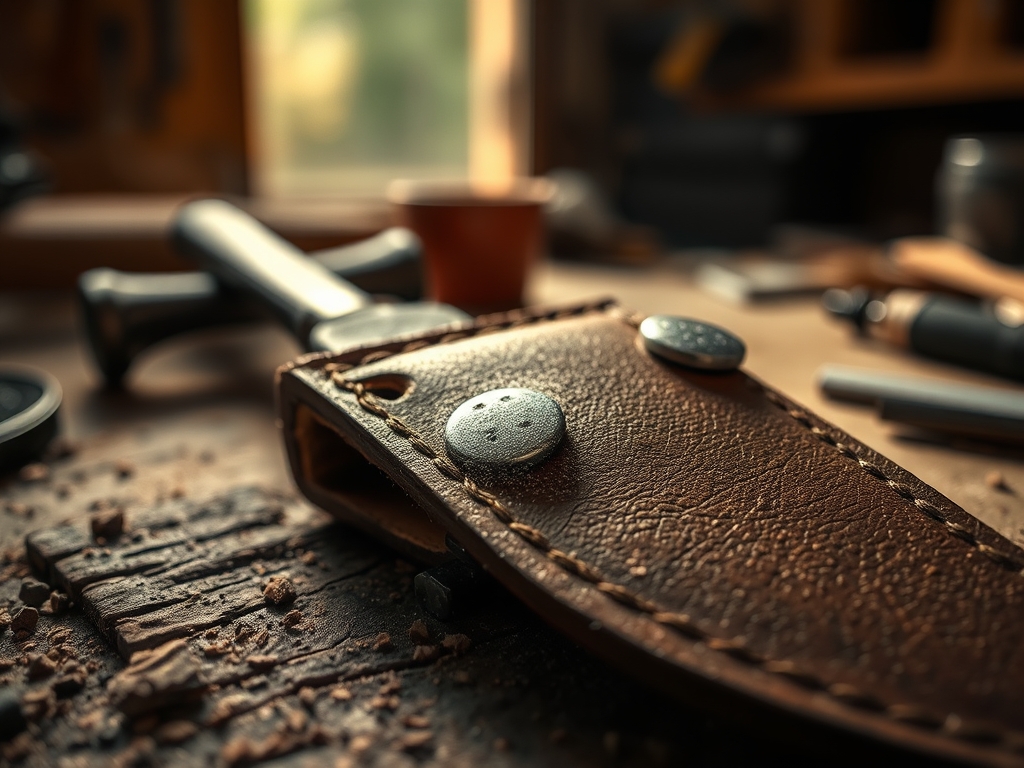
The smell of freshly cut vegetable tanned hide is a drug; it is earthy, sweet, and heavy with the promise of protection. You know that feeling when you hold a blade that is so sharp it practically hums against your palm? My favorite carving knife is a surgical extension of my hand, but leaving that edge exposed is a recipe for a dull blade or a sliced finger. Hand Stitching a Leather Sheath is the only way to honor the steel. We are not just making a bag for a tool; we are engineering a friction-fit housing that accounts for the moisture-wicking properties of organic fibers. As we pull the waxed thread through the pre-punched holes, we are creating a structural bond that resists the lateral shear forces of a sharp edge. It is tactile, it is rhythmic, and it is the ultimate upgrade for your studio kit. We are about to turn a flat piece of five-ounce cowhide into a bespoke suit for your finest carbon steel.
THE STUDIO KIT
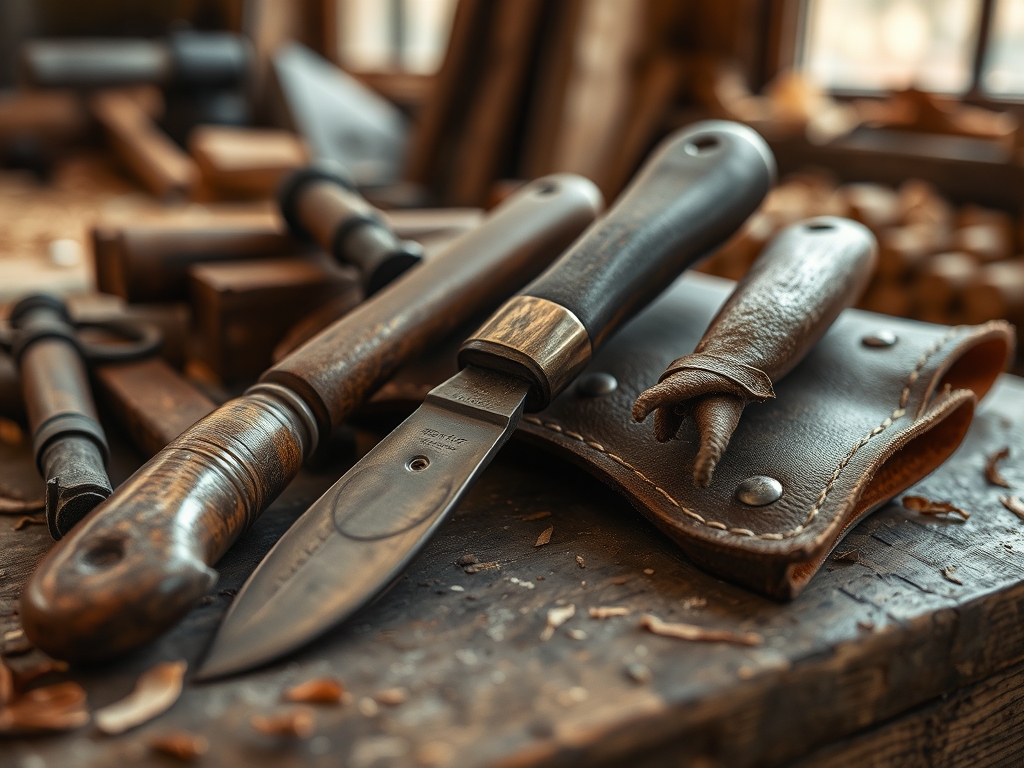
To execute this build with professional precision, you need a kit that respects the **tensile strength** of your medium. Start with a piece of 4 to 6 ounce vegetable tanned leather; this thickness provides enough body to prevent the blade from piercing the sidewall while remaining supple enough to mold. You will need a pair of **digital calipers** to measure the spine thickness of your knife, ensuring the internal cavity is not too tight. For the cutting phase, a high-carbon steel **rotary cutter** or a dedicated head knife is essential for maintaining clean, perpendicular edges.
The stitching phase requires a diamond awl, a stitching pony to hold the work vertically, and two blunt-tip harness needles. We use poly-braided waxed thread because the wax acts as a lubricant during the pass and a sealant once the stitch is set. For the finishing touches, grab a wood burnisher and some gum tragacanth to seal the edges.
Material Substitutions: If you cannot source vegetable tanned leather, look for heavy-duty upcycled belts, provided they are not chrome-tanned, as residual chromium salts can corrode high-carbon steel over time. If you lack a professional burnisher, the smooth back of a plastic lighter or a bone folder works wonders for compressing the leather fibers through friction-generated heat.
THE TEMPO
The "Maker's Rhythm" is all about respecting the chemical and physical changes the material undergoes. Expect to spend about four hours on this project, broken down into distinct phases of intensity. The Patterning and Cutting phase takes about 45 minutes; it requires high cognitive load and precise geometry. The Conditioning and Casing phase takes 30 minutes, where we introduce moisture to the leather to make it plastic and moldable.
The Stitching Marathon is the longest stretch, usually 90 minutes of repetitive, meditative motion. This is where the "flow state" happens. Finally, the Edge Finishing and Curing takes about an hour. You cannot rush the drying process. If you force the leather to dry too quickly with a heat gun, you risk "cooking" the collagen fibers, which makes the sheath brittle rather than resilient.
THE CORE METHOD
1. Geometric Patterning and Grain Alignment
Use a piece of heavy cardstock to trace the profile of your blade. You must add a welt; this is a sacrificial strip of leather that sits between the two main layers where the blade edge rests. Without a welt, your knife will eventually cut through your stitches. Ensure your pattern aligns with the tightest grain direction of the hide to minimize stretching over years of use.
Mastery Tip: Leather is an anisotropic material, meaning its strength varies based on the direction of the fibers. By aligning the length of the sheath with the animal's spine direction, you maximize the longitudinal stability of the holster.
2. Casing the Leather for Plasticity
Lightly dampen the leather with a sponge. You are looking for the "sweet spot" where the leather returns to its original color but feels cool to the touch. This process, known as casing, breaks down the hydrogen bonds between collagen fibers, allowing the material to be molded around the handle of the knife for a perfect "click-fit" retention.
Mastery Tip: This involves capillary action, where water molecules pull the fibers into a tighter matrix as they evaporate. If you mold the leather while it is too wet, you lose the crisp definition of the tool's silhouette.
3. The Saddle Stitch Execution
Using your stitching pony, perform a classic saddle stitch by passing two needles through the same hole from opposite directions. This creates an interlocking weave that will not unravel even if one thread is severed. Maintain consistent tension on every pull to ensure the "cast" of the stitch looks uniform on both the show side and the back.
Mastery Tip: The saddle stitch relies on mechanical friction. By crossing the threads in a specific orientation inside the hole, you create a locking knot that distributes the load across the entire seam rather than a single point of failure.
4. Burnishing the Edges
Apply a small amount of gum tragacanth to the raw edges. Use your wood burnisher to rub the edge rapidly. The friction generates heat, which fuses the loose protein fibers into a solid, glass-like surface. This is not just aesthetic; it seals the edge against moisture and prevents delamination of the leather layers.
Mastery Tip: This is a matter of thermodynamics. The heat melts the natural waxes and tannins within the leather, creating a lignified edge that increases the structural integrity of the entire sheath.
THE TECHNICAL LEDGER
Maintaining your sheath is a lifetime commitment. Every six months, apply a light coat of neatsfoot oil or beeswax conditioner to replenish the lipids lost to evaporation. This keeps the fibers lubricated and prevents stress fractures at the flex points.
Material Variations:
- Sustainable: Cork "leather" or Piñatex (pineapple fiber) are great vegan alternatives, though they lack the self-healing properties of animal hide.
- Premium: Shell Cordovan offers the highest density and a natural luster that requires almost no maintenance.
The Correction:
- The Loose Fit: If the sheath is too loose, re-dampen the leather and use a bone folder to compress the fibers around the knife's guard.
- The Pierced Thread: If you accidentally stitch through your thread, back out immediately. A pierced thread creates a weak point that will snap under tensile stress.
- The Rough Edge: If your burnish looks "fuzzy," you didn't sand enough. Go back to 400-grit sandpaper and work up to 1000-grit before reapplying the burnishing agent.
Studio Organization: Store your leatherwork in a cool, dry place away from direct UV light. UV radiation triggers photo-oxidation, which breaks down the tannins and causes the leather to change color and lose its elasticity.
THE FINAL REVEAL
There is nothing quite like the "thunk" of a high-carbon blade sliding into a perfectly fitted, hand-stitched leather sheath. The vegetable tanned hide will develop a rich patina over time, recording the history of your work in every scuff and darkened edge. You have moved beyond simple crafting into the realm of functional tool engineering. This sheath is not just a protector; it is a testament to your respect for your tools and the physics of the materials you handle every day.
STUDIO QUESTIONS
Why use a welt in a leather sheath?
A welt is a strip of leather placed between the main layers to protect the stitching. It prevents the sharp edge of the knife from cutting through the threads during insertion or removal, ensuring structural longevity.
Is vegetable tanned leather better than chrome tanned?
Yes, for tool storage. Chrome tanned leather contains residual salts and acids that can cause oxidative corrosion on metal blades. Vegetable tanned leather uses natural tannins, making it chemically inert and safe for long-term contact.
What thread is strongest for hand stitching?
Poly-braided waxed thread is the professional standard. The polyester core provides high tensile strength and resistance to rot, while the wax coating lubricates the pass and locks the stitch in place via mechanical friction.
How do I fix a burnished edge that won't stay shiny?
This usually happens if the leather fibers are too dry or the sanding wasn't fine enough. Re-sand the edge with high-grit paper, apply a bit more moisture or burnishing compound, and increase your friction speed.