
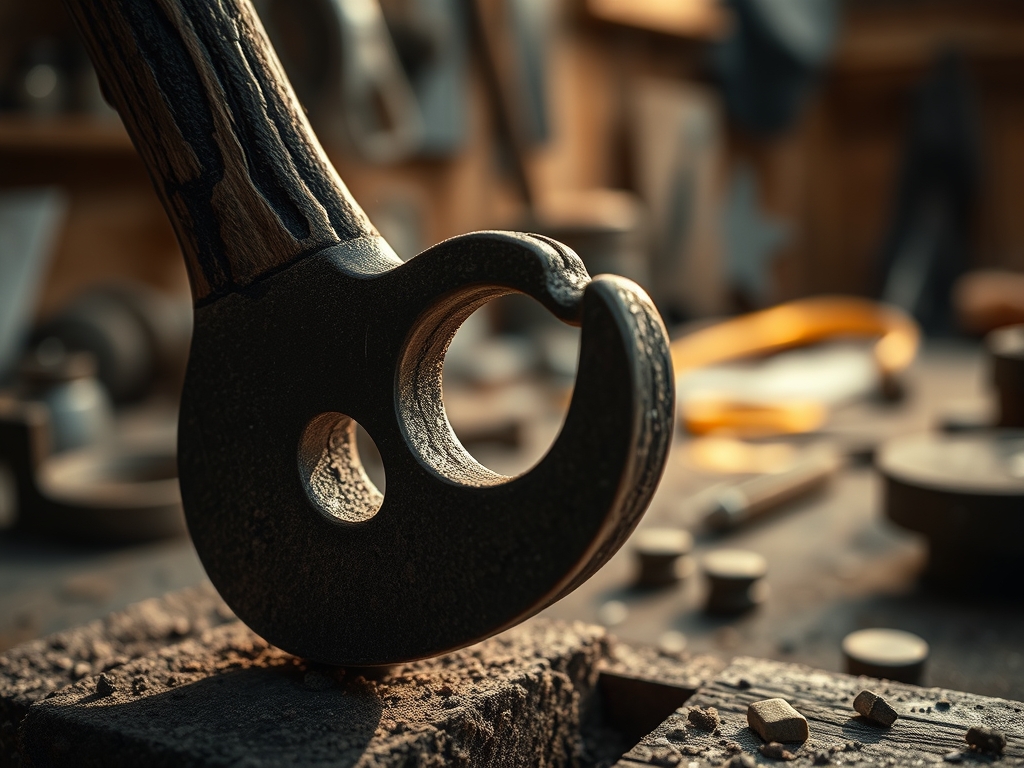
The smell of hot iron is essentially the scent of raw potential. When you stand over a glowing forge, you are not just playing with fire; you are manipulating the molecular lattice of carbon steel. Forging a Metal Drive Hook is the absolute gold standard for anyone looking to graduate from delicate taps to those soul-satisfying, heavy hammer hits. There is a specific, visceral vibration that travels up your arm when the face of a three pound cross-peen hammer meets orange-hot metal. It is a lesson in plastic deformation. You are forcing the crystalline structure of the steel to slide and relocate without fracturing. This project is fast, loud, and incredibly rewarding because it demands you commit to every strike. If you hesitate, the heat dissipates, and the metal regains its stubborn rigidity. We are looking for that sweet spot where the steel behaves like stiff clay. Grab your safety gear and clear some space on the anvil. We are about to turn a simple square bar into a structural masterpiece that can bite into a timber post and hold its weight forever.
THE STUDIO KIT
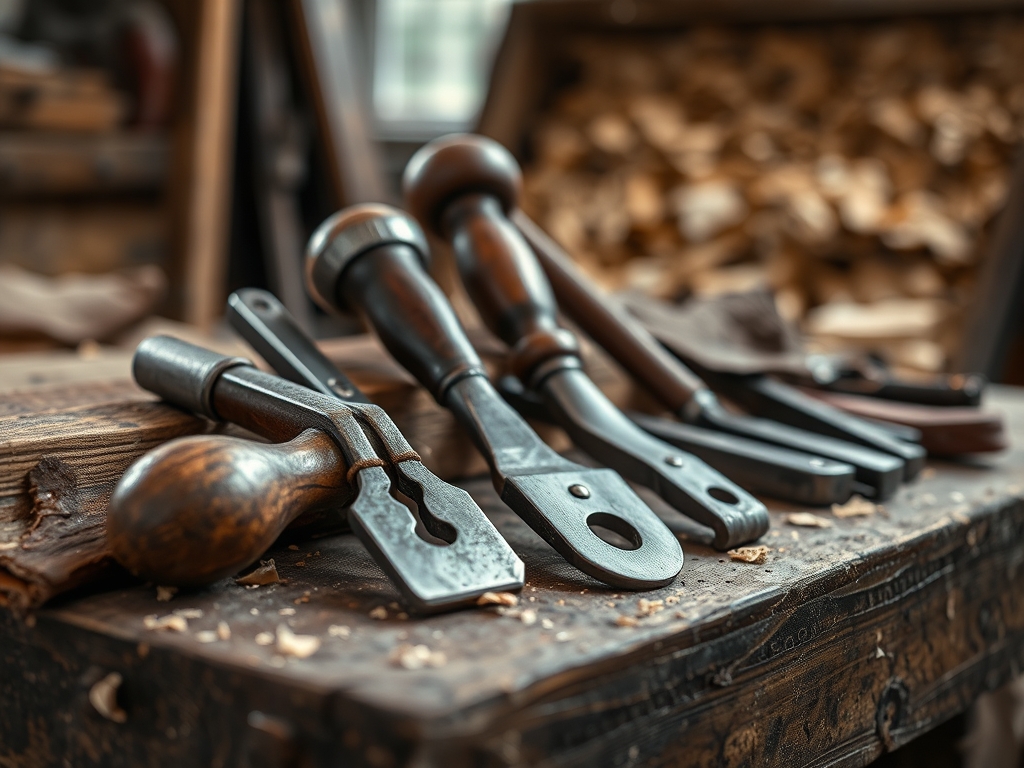
To master this build, you need tools that respect the laws of thermodynamics. Your primary material is a six inch length of 3/8 inch square mild steel bar. Mild steel is ideal because its lower carbon content makes it more ductile and less prone to "red shortness" or cracking at high temperatures. You will also need a three pound blacksmithing hammer; the weight is essential to ensure your energy transfers through the core of the metal rather than just mushrooming the surface.
Your toolkit must include a pair of wolf jaw tongs to securely grip the square profile without slipping. For precision, keep a pair of steel calipers nearby to check your taper consistency. You will also need a hardy tool or a heavy duty hacksaw for the initial cut. If you are looking for material substitutions, you can repurpose old coil springs, though they require more careful heat treatment due to their higher carbon content. For a more decorative look, a copper alloy bar can be used, but keep in mind that non-ferrous metals have a much lower melting point and do not require the same heavy impact.
THE TEMPO
The "Maker's Rhythm" for this project is divided into three distinct movements: The Heat, The Move, and The Refine. Expect to spend about ten minutes on the initial taper, where the heaviest hits occur. This is followed by a five minute session of shaping the hook curve. Finally, a five minute finishing phase involves wire brushing and oiling. Total active "under the hammer" time is roughly twenty minutes. The rhythm is dictated by the color of the metal; you work while it is a vibrant lemon-yellow or bright orange, and you stop the moment it fades to a dull cherry red. Working the metal too cold causes internal stress fractures, so the tempo is a constant cycle of "heat, hit, repeat."
THE CORE METHOD
1. The Square Taper
Begin by heating the last two inches of your bar to a bright orange. Position the end of the bar on the far edge of the anvil at a slight downward angle. Deliver heavy, rhythmic blows to create a four sided point. This process, known as drawing out, increases the length of the material while decreasing its cross-sectional area.
Mastery Tip: This step relies on displacement physics. By maintaining a square profile as you taper, you ensure the grain of the steel remains aligned. If you try to make it round too early, you risk "fish-mouthing" the tip, which creates a structural void that ruins the hook's integrity.
2. Transitioning to Octagon
Once you have a consistent square taper, rotate the bar 45 degrees and strike the corners. This transforms the square into an octagon. This is a crucial transitional step that prepares the metal for a smooth, rounded finish without creating "laps" or cold shuts where the metal folds over itself.
Mastery Tip: Transitioning through an octagon shape manages the hoop stress of the material. It ensures that the compression is even across all axes, preventing the center of the bar from becoming hollow or weak during the rounding process.
3. The Hook Bend
Heat the tapered section and the area immediately behind it. Place the tip over the anvil horn and use glancing blows to start the curve. You are not just bending the metal; you are stretching the outer radius while compressing the inner radius. Work the curve until it forms a graceful "U" shape with the point slightly flared outward.
Mastery Tip: Observe the thermal gradient. The thinnest part of the taper will lose heat fastest. To maintain a uniform curve, you must strike the thicker sections with more force while the tip is still hot enough to move, ensuring the bend does not "kink" at the weakest point.
4. Setting the Drive Point
The opposite end of the hook needs to be blunt and sturdy enough to be driven into wood. Square off the end using a set hammer or by "upending" the bar, striking the end vertically against the anvil face to slightly thicken it. This increases the impact surface area, preventing the metal from deforming when you eventually hammer it into a wall or post.
Mastery Tip: This is an exercise in upsetting. By striking the end of the bar vertically, you are forcing the metal to widen, which increases the density and structural rigidity of the drive end, making it resistant to mushrooming under future heavy use.
THE TECHNICAL LEDGER
Maintenance & Longevity: Steel is prone to oxidation. To protect your hook, perform a traditional oil finish. While the metal is still "black hot" (around 400 degrees Fahrenheit), wipe it down with linseed oil or beeswax. The heat opens the microscopic pores of the steel, allowing the oil to polymerize and create a durable, rust-resistant barrier.
Material Variations: For a premium version, use 304 stainless steel, though it is significantly harder to move and requires an oscillating tool for fine finishing. For a sustainable approach, upcycle old rebar; the ridges provide a unique tactile texture, though the inconsistent carbon content makes it less predictable under the hammer.
The Correction:
- The Fish-Mouth: If the tip of your taper splits, you hit it while it was too cold. The Fix: Cut off the split end with a jeweler's saw or hardy tool and restart the taper at a higher heat.
- The Kink: If the curve is uneven, you likely over-hit a thin section. The Fix: Re-heat the entire hook and use a mandrel to reshape the curve from the inside out.
- Surface Scaling: Heavy pitting occurs if the metal sits in the forge too long. The Fix: Use a stiff wire brush between every heat to remove ferrous oxide buildup.
Studio Organization: Store your finished hooks in a dry, low-humidity environment. If you are storing raw stock, keep it off concrete floors to prevent moisture wicking, which causes deep pitting. Use a vertical rack to organize by gauge and material type.
THE FINAL REVEAL
Look at that! You have successfully transitioned from a static piece of industrial stock to a functional, hand-forged tool. The taper is smooth, the curve is ergonomic, and the drive point is solid. There is a specific pride in knowing that the shape of that metal was determined by the force of your own swing and your understanding of thermal dynamics. This drive hook is not just a hanger; it is a testament to your ability to command the elements. It is rugged, honest, and built to last a century.
STUDIO QUESTIONS
How do I know if the steel is hot enough?
The steel should glow a bright orange or lemon yellow. If it looks dull red, it is too cold for heavy displacement. If it starts sparking, you are literally burning the carbon out of the metal; pull it out immediately.
Can I use a regular carpenter's hammer?
No, carpenter's hammers are case-hardened and can chip or shatter when striking hot steel or an anvil. You need a dedicated blacksmithing hammer made of drop-forged tool steel to safely handle the shock of the impact.
What is the best way to cool the hook?
For mild steel, you can quench it in a bucket of water to cool it quickly for handling. However, if you are using high-carbon steel, you must let it air cool slowly to avoid making the metal brittle and prone to snapping.
Why is my taper curving to one side?
This happens if you are not striking the center of the bar or if your anvil face is not level. Ensure your hammer face hits flush and centered on the workpiece to maintain a straight, professional-grade taper throughout the forging process.