
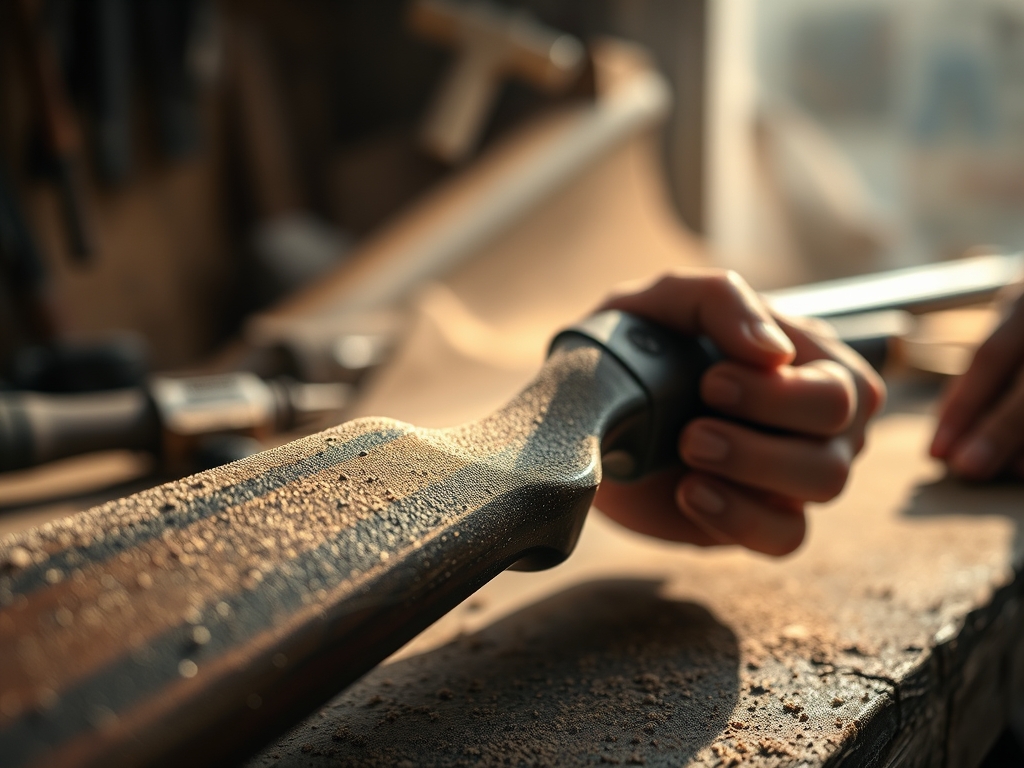
Imagine the weight of a raw American black walnut blank resting in your palms. It is heavy; dense; and currently as dull as a chalkboard. You are holding a dormant masterpiece of biological engineering. To wake it up, you have to master the art of Hand Sanding a Gun Stock, a process that is less about friction and more about surgical precision. We are looking for that moment where the light hits the chatoyancy of the wood, revealing those deep, chocolate swirls that make walnut the gold standard of hardwoods. It is a tactile journey where your fingertips become the ultimate sensors, detecting microscopic burrs that even a laser might miss. We are not just smoothing a surface; we are exfoliating the cellular structure of the timber to let the finish penetrate deep into the porous heartwood. Grab your safety glasses and a cup of strong coffee. We are about to turn this rugged hunk of cellulose and lignin into a piece of ergonomic art that feels like an extension of your own arm.
THE STUDIO KIT
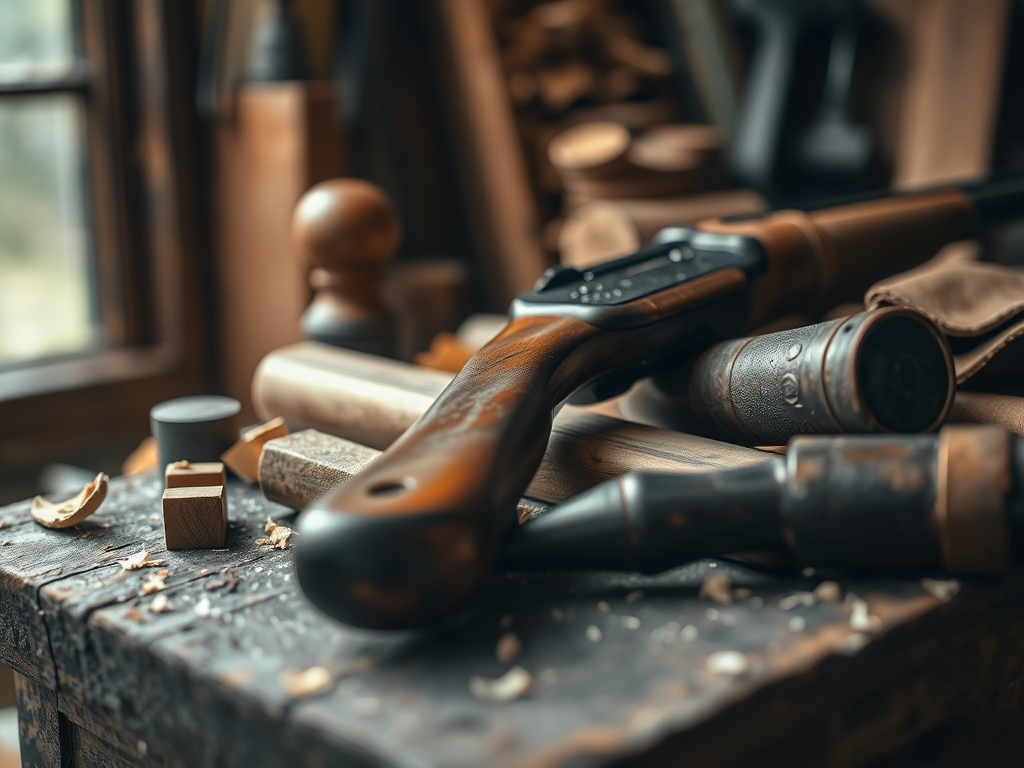
To achieve a professional grade finish, your workbench needs to look like a hybrid between a woodshop and a laboratory. You cannot just grab a sheet of hardware store sandpaper and hope for the best. We need tools that respect the tensile strength of the walnut fibers.
- Silicon Carbide Wet/Dry Paper: Ranging from 120 grit for shaping to 2000 grit for that glass-like burnish.
- Hard Rubber Sanding Blocks: These are non-negotiable. Using your bare hand for the early stages creates "finger grooves" that ruin the flat planes of the stock.
- Precision Calipers: To ensure you are not removing too much material around the receiver or the buttplate.
- Tack Cloths: Chemically treated to pull every speck of dust out of the grain.
- Mineral Spirits: For "cleaning the slate" and checking the grain pattern mid-process.
- Compressed Air: To blow out the dust from the checkering and tight corners.
Material Substitutions: If you cannot find high-grade rubber blocks, a firm cork block or even a piece of dense felt wrapped around a wooden dowel works wonders for the curved sections of the grip. For the final polish, an old denim scrap acts as a fantastic high-grit abrasive to pull out the natural oils.
THE TEMPO
The "Maker's Rhythm" is a steady, meditative pulse. You cannot rush the molecular bonding of the wood fibers. Expect to spend at least ten to fifteen hours on the sanding phase alone.
- The Rough Cut (2 Hours): Removing the tool marks from the initial shaping.
- The Refinement (5 Hours): Stepping through the grits (220 to 600). This is where the ergonomic profile starts to shine.
- The Grain Raise (3 Hours): A cycle of wetting and drying to "pop" the whiskers.
- The Final Polish (2 Hours): The high-grit dance that prepares the surface for the oil.
The secret is to listen to the wood. When the paper stops "singing" and starts to glide silently, you have exhausted that grit level and are ready to move up.
THE CORE METHOD
1. Mapping the Grain Direction
Before you even touch the wood with an abrasive, you must identify the grain direction. Walnut is notorious for having "run-out" where the fibers change direction unexpectedly. Always sand with the grain to avoid tearing the fibers.
Mastery Tip: This is about structural integrity. Sanding against the grain creates microscopic fractures that will trap finish unevenly, leading to "blotchiness." Use a bright LED lamp at a low angle to see the "shadows" of the grain.
2. The Initial Leveling
Start with 120 or 150 grit. Your goal here is to remove the "scars" left by the oscillating tool or rasps used during the rough shaping. Use firm, even pressure on your sanding block.
Mastery Tip: Use the science of surface tension. If you see shiny spots, those are low areas that the sandpaper hasn't touched yet. You must sand the entire surface until it is uniformly matte.
3. Raising the Whiskers
This is the pro move. Wipe the stock with a damp (not soaking) cloth. As the water evaporates, the compressed wood fibers will stand up. Once dry, sand them off with 400 grit.
Mastery Tip: This utilizes capillary action. By forcing the fibers to stand up now, you prevent them from rising later when you apply your oil finish, which ensures the final product stays smooth forever.
4. The High-Grit Burnish
Once you hit 800 grit, stop using the block for the rounded areas. Use the "shoe-shine" method with strips of sandpaper to follow the ergonomic contours of the cheek piece and grip.
Mastery Tip: At this stage, you are effectively closing the pores of the wood. The heat generated by the friction helps to "melt" the natural resins in the walnut, creating a self-sealing layer.
5. The Final Inspection
Clean the stock thoroughly with mineral spirits. This mimics the look of a wet finish, allowing you to see any remaining scratches or "pigtails" left by the sanding process.
Mastery Tip: This is a check for optical refraction. Any scratch left behind will act as a prism, catching the light and distracting from the natural beauty of the wood grain.
THE TECHNICAL LEDGER
Maintenance & Longevity
A well-sanded gun stock is a lifetime investment. To maintain the tactile quality, avoid harsh chemical cleaners. A simple wipe-down with a microfiber cloth after use is usually enough. Every year, a light application of high-quality linseed or tung oil will keep the wood hydrated and prevent it from becoming brittle.
Material Variations
- Sustainable: Reclaimed walnut from old furniture offers a unique, aged patina but requires careful checking for old nail holes.
- Premium: Exhibition-grade Turkish Walnut has a higher density and tighter grain, requiring even more patience during the sanding phase.
- Recycled: Composite wood stocks are easier to sand but lack the "soul" and warmth of solid timber.
The Correction
- The Mistake: Oversanding the edges. This rounds off the crisp lines where the wood meets metal. The Fix: Always sand toward the edge, never over it, and keep your block flat.
- The Mistake: Sanding Dust Clogs. This creates "burn marks" on the wood. The Fix: Clean your sandpaper frequently with a rubber cleaning stick or a stiff brush.
- The Mistake: Skipping Grits. Moving from 220 to 600 directly. The Fix: You must go back. The 600 grit is not aggressive enough to remove the 220 grit scratches.
Studio Organization
Store your project in a climate-controlled environment. Drastic changes in humidity can cause the walnut to expand or contract, potentially cracking the wood if it is held in a vise too tightly. Use padded "soft jaws" on your vise to prevent marring the ply of the wood.
THE FINAL REVEAL
There is nothing quite like the moment you wipe away the final layer of dust and see that walnut glow. It is no longer just a piece of a tree; it is a custom-fitted, ergonomic masterpiece. The grain should look three-dimensional, with the dark "cathedrals" of the wood popping against the lighter honey tones. When you shoulder the stock, it should feel like silk against your skin. You have successfully navigated the physics of woodcraft, turning raw material into a legacy piece through the simple, honest power of hand sanding.
STUDIO QUESTIONS
What is the best grit to stop at for a hunting rifle?
For a working rifle, stopping at 400 or 600 grit is ideal. This provides a balance between a smooth feel and a surface that still has enough "tooth" to hold a protective oil finish in rugged conditions.
Can I use a power sander for Hand Sanding a Gun Stock?
Power sanders are too aggressive for the final stages. They can easily create flat spots or "dish out" softer areas of the grain. Stick to hand sanding to maintain the precise ergonomic lines of the stock.
How do I know if I have sanded enough?
Wipe the wood with mineral spirits. If the surface looks perfectly uniform and no sanding scratches are visible under a bright light, you are ready to move to the next grit or the final finish.
Why does my walnut look "muddy" after sanding?
This usually happens when dust is trapped in the pores. Use compressed air and a fresh tack cloth to thoroughly clean the surface. If it persists, you may need to raise the grain again to clear the cellular debris.