

Close your eyes and imagine the scent of freshly sheared white oak and the cool, heavy weight of solid brass in your palm. We are moving past the clumsy world of graphite and ink because, let's be honest, a pencil line is just a suggestion. When you are chasing perfection, you need a physical groove that locks your blade into place. Using a Marking Gauge is the moment your project transitions from a rough idea into a high precision masterpiece. A pencil lead has a measurable thickness, usually around 0.5 millimeters, which creates a margin of error that can ruin a dovetail joint. By contrast, a hardened steel pin or a circular cutting wheel severs the wood fibers at a specific molecular coordinate. This creates a microscopic canyon that guides your saw or chisel with absolute mechanical certainty. You are not just drawing; you are pre-scoring the grain to prevent splintering. This tactile feedback allows you to feel the density of the earlywood and latewood rings as you glide across the board. It is visceral, it is satisfying, and it is the only way to ensure your joinery snaps together with that legendary airtight click.
THE STUDIO KIT
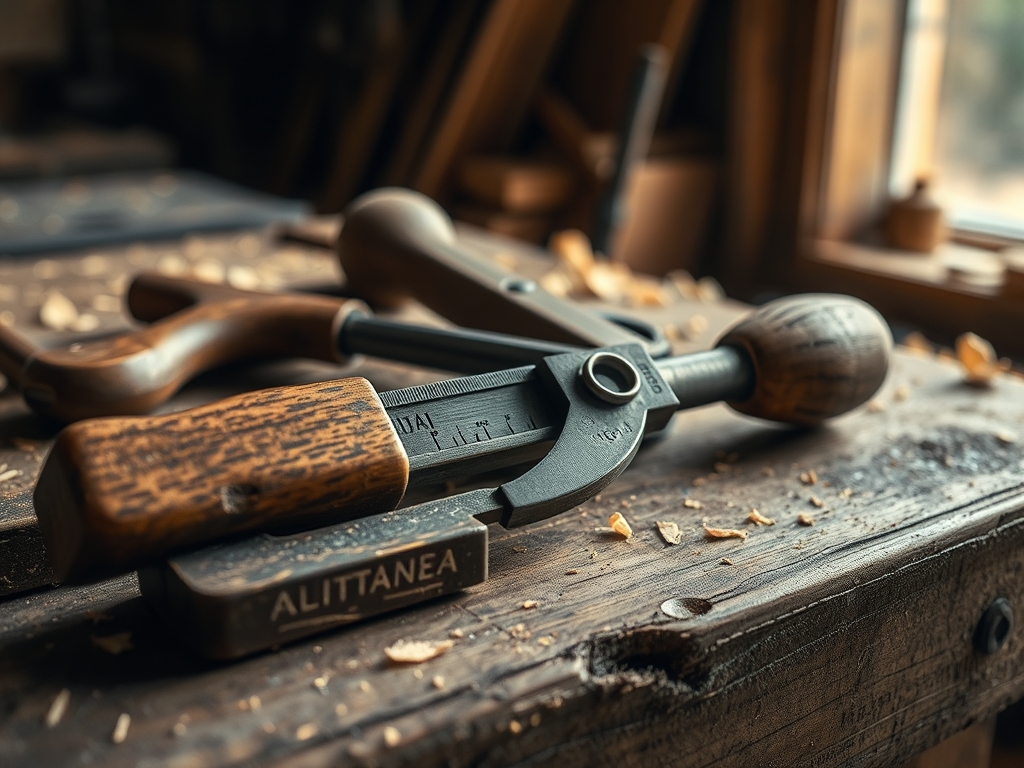
To master this technique, you need a kit that respects the tensile strength of your medium. Your primary instrument is the marking gauge itself; preferably one with a heavy brass faceplate to provide low-friction stability against the reference edge. You will also need digital calipers to verify your offsets to the thousandth of an inch and a high-carbon steel marking knife for cross-grain transitions. For the material, choose a dense, closed-pore hardwood like cherry or maple. These woods have a high fiber density, which allows the gauge to leave a crisp, clean wall rather than a ragged tear. If you are working with softer species like pine, you must increase your pressure to compensate for the cellular voids.
Material Substitutions: If you lack a traditional gauge, a combination square paired with a sharp scratch awl can mimic the effect, though it lacks the ergonomic locking mechanism of a dedicated tool. For those working in leather or soft plastics, a dividers tool or a wing compass serves as a brilliant substitute. These tools utilize the same principle of mechanical displacement to create a guide path without the chemical interference of inks or dyes.
THE TEMPO
The "Maker's Rhythm" is not about speed; it is about the synchronization of your breath with the resistance of the material.
- The Calibration Phase (5 Minutes): This is the slow, methodical part. You are using your calipers to set the gauge. This phase requires a "measure twice, lock once" mentality to ensure your spatial alignment is flawless.
- The Scoring Phase (2 Minutes per board): This is the high-energy movement. Once the tool is set, the actual marking happens in fluid, confident strokes. You are looking for a steady "hiss" sound as the steel severs the lignin.
- The Verification Phase (1 Minute): A quick tactile check with your fingernail. If the nail drops into the groove, you have achieved the necessary depth for tool registration.
Total project time for a standard set of joints usually clocks in at 15 to 20 minutes. The rhythm should feel like a dance; slow and analytical during the setup, then swift and decisive during the execution.
THE CORE METHOD
1. Establishing the Reference Face
Before the steel ever touches the wood, you must identify your "flat and square" edge. Use a try square to ensure your reference surface is perfectly perpendicular. If your edge is canted even by a degree, the gauge will telegraph that error across the entire workpiece.
Mastery Tip: This relies on the physics of planar geometry. Because the gauge fence mimics the contour of the wood, any microscopic bump in the grain will be duplicated in your score line. Always burnish your reference edge first to remove stray fibers.
2. Setting the Cutter Depth
Loosen the thumb screw and slide the head of the gauge until the distance between the fence and the cutter matches your desired measurement. Use a steel rule or calipers for this; never trust the built-in scales on cheaper tools as they can shift during the manufacturing process.
Mastery Tip: Consider the displacement volume. A deep scratch is easier to see, but it can weaken the structural integrity of thin stock. Aim for a depth of 0.5mm, which is deep enough to seat a chisel tip without compromising the wood's shear strength.
3. The Trailing Angle Strike
Hold the gauge with a firm, ergonomic grip. Tilt the tool slightly away from the direction of travel so the pin "trails" behind the head. This prevents the needle from digging too deep and wandering into the grain lines, which act like tiny railroad tracks trying to pull you off course.
Mastery Tip: This utilizes vector force. By angling the tool, you resolve the forward pressure into two components: one that keeps the fence tight against the wood and one that slices the surface. This prevents "chatter" or jumping.
4. The Final Deepening Pass
Your first pass should be light; a mere ghost of a line. Once the path is established, perform a second, heavier pass to finalize the groove. This ensures that the fibers are severed cleanly rather than crushed.
Mastery Tip: This involves capillary action prevention. By severing the fibers cleanly, you prevent wood glue from wicking into the surrounding grain during assembly, which ensures your finish will look professional and blotch-free.
THE TECHNICAL LEDGER
Maintenance & Longevity: Steel components are prone to oxidation. Wipe your gauge with a light coat of camellia oil or paste wax after every session. If using a wheel-style gauge, use a diamond stone to occasionally hone the circular edge to a razor sharpness.
Material Variations:
- Sustainable: Bamboo is incredibly hard but has a linear grain that splits easily; use a wheel gauge here to slice rather than a pin gauge to scratch.
- Premium: Exotic woods like Ebony or Cocobolo are naturally oily; they require more pressure because the oils act as a lubricant for the cutter.
The Correction:
- The Wander: If the pin follows the grain away from your line, fill the scratch with a mix of sawdust and wood glue, sand it flush, and restart with a lighter touch.
- The Tear: If the wood splinters, your cutter is dull. Stop and sharpen the pin to a needle point using a jeweler's saw file or a fine whetstone.
- The Over-shoot: If you mark past your joinery line, use a damp cloth to "swat" the wood. The moisture causes the crushed fibers to swell back to their original position.
Studio Organization: Store your marking gauges in a vertical rack or a dedicated foam-lined drawer. Never let the cutting edges touch other metal tools, as this leads to microscopic chipping that will result in ragged lines during your next project.
THE FINAL REVEAL
Look at that! The light catches those scored lines and creates a high-contrast map of exactly where your saw needs to go. There is a profound sense of confidence that comes with a physically engraved layout. You have moved beyond the guesswork of "somewhere near the pencil line" and entered the realm of absolute precision. The surface of the wood feels professional; it looks intentional; and most importantly, it is mathematically correct. Your joints are going to fit together like they were grown that way. That little scratch is the difference between a "DIY project" and a "heirloom piece."
STUDIO QUESTIONS
Why is a marking gauge better than a pencil?
A marking gauge creates a physical groove that mechanically registers your tools. Unlike a pencil line, which has width and can be rubbed away, a scored line provides a zero-tolerance guide that ensures your cuts are perfectly aligned with the wood grain.
What is the difference between a pin and a wheel gauge?
Pin gauges use a sharpened needle to scratch the surface, making them ideal for marking along the grain. Wheel gauges use a circular blade to slice through fibers, which is superior for cross-grain work as it prevents tearing and splintering.
How do I stop the gauge from following the wood grain?
Tilt the gauge so the cutter trails at an angle rather than standing vertically. This reduces the downward force that allows the grain to pull the tool off course. Start with a very light "whisper" pass to establish the path first.
Can I use a marking gauge on plywood or MDF?
Yes, but use a wheel-style gauge. Plywood and MDF are composed of alternating layers and adhesives that can cause a pin gauge to jump or snag. A circular cutting wheel will slice through these layers cleanly without causing delamination or surface chipping.