The smell of freshly milled black walnut is basically my version of expensive perfume; it is earthy, sweet, and carries that unmistakable scent of potential. You are standing over a massive, raw slab of lumber, and your heart is racing because you are about to turn this irregular beast into a perfectly symmetrical masterpiece. The secret to that flawless perimeter is Using a Trammel Point to defy the limitations of a standard compass. When you are dealing with a radius that exceeds the reach of your own arm, you cannot rely on flimsy plastic tools or a piece of string that will inevitably stretch under tension. We are looking for mathematical precision here. You want a line so crisp it looks like it was etched by a laser, but we are doing it with old school physics and high end steel. Grab your coffee and let's get into the grain.
THE STUDIO KIT
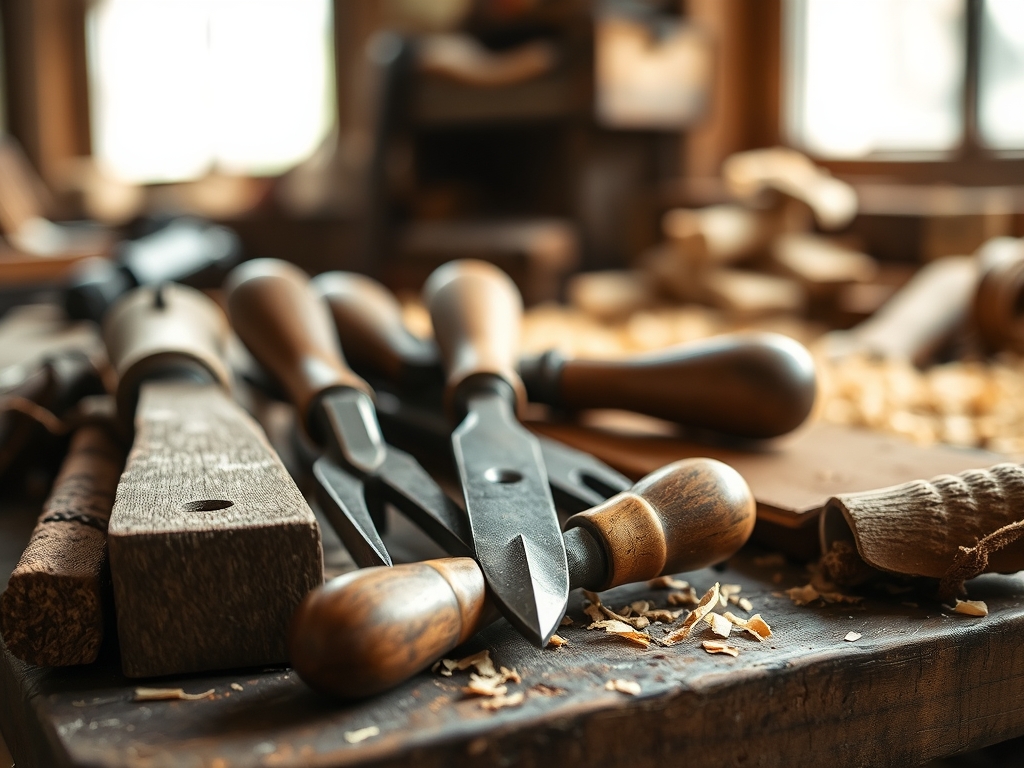
To execute this with professional flair, you need a kit that respects the tensile strength of your marking beam. Your primary tool is a set of solid brass or hardened steel trammel heads. These are designed to slide onto a wooden bar, known as a beam, which must be perfectly straight to avoid any radial deviation. I prefer a beam made of kiln dried maple because its high fiber density prevents bowing during the scribe. You will also need a hardened steel awl for marking your center point and a 0.5mm mechanical pencil or a marking gauge for the actual line.
If you are looking for Material Substitutions, you can swap the wooden beam for a length of aluminum extrusion if you want zero environmental expansion. Instead of a dedicated trammel set, some makers use a scrap piece of plywood with holes drilled at specific intervals, but you lose the micro adjustment capability that makes a professional set so satisfying. You should also have a digital caliper on hand to verify the thickness of your beam; if the beam is too thin, the trammel heads will wobble, ruining your concentric accuracy.
THE TEMPO
The "Maker's Rhythm" is all about balancing your internal energy with the physical resistance of the wood. This project follows a specific cadence that prevents burnout and ensures accuracy.
- The Calibration Phase (15 Minutes): This is the quiet time. You are measuring, double checking your math, and ensuring your beam is perfectly planed. Technical Fact: Wood can expand up to one percent across the grain with humidity shifts, so calibrate in the same environment where the wood has acclimated.
- The Scribe Phase (10 Minutes): This is the high stakes moment. It requires a steady hand and a consistent downward pressure to ensure the lead or scribe tip doesn't jump the grain.
- The Verification Phase (5 Minutes): Using a steel tape, you measure the diameter at multiple points to ensure the circle hasn't become an ellipse due to beam flex.
THE CORE METHOD
1. Establishing the Epicenter
First, find the exact center of your workpiece. Use a long straightedge to mark diagonals from the corners. Where they intersect is your "dead center." Use a center punch or a sharp awl to create a small pilot hole. This hole acts as a mechanical seat for the pivot point of your trammel.
Mastery Tip: The science here involves pivot friction. By creating a physical depression, you ensure the trammel point rotates on a fixed axis without "skating" across the earlywood and latewood rings, which have different densities.
2. Setting the Radial Distance
Slide your first trammel head to the end of your beam and tighten it. This is your anchor. Measure out your desired radius from this point and slide the second head (the one holding the pencil or scribe) into position. Use your calipers to fine tune the distance between the two points.
Mastery Tip: Always account for the kerf of your saw later. If you want a 48 inch table, scribe at 48 and one eighth inches to allow for the material lost during the sanding and smoothing of the edges.
3. The Fluid Rotation
Position the anchor point in your center hole. Holding the anchor steady with one hand, use your other hand to lightly guide the marking head in a slow, continuous arc. Do not push the beam; pull it toward you in sections.
Mastery Tip: This involves lateral rigidity. If you apply too much downward force on a long beam, it can deflect downward, effectively shortening the radius and creating a "flat" spot in your circle. Maintain a light, tangential touch.
THE TECHNICAL LEDGER
Maintenance & Longevity
Keep your trammel points lightly oiled with a dry lubricant to prevent oxidation. If you use a wooden beam, store it flat or hanging vertically. Never lean it against a wall, as gravity will induce a permanent bow over time, rendering your measurements useless.
Material Variations
- Sustainable: Reclaimed white oak offers incredible structural integrity but has large pores that can catch a fine pencil lead.
- Premium: Exotic woods like Wenge are extremely dense and brittle; use a metal scribe instead of a pencil to prevent the line from "bleeding" into the dark grain.
- Recycled: Plywood is stable, but the cross grain layers can cause the trammel point to vibrate. Slow your tempo.
The Correction
- The Spiral Drift: If your circle doesn't meet at the start, your anchor moved. The Fix: Fill the center hole with a tiny dowel and wood glue, re drill, and start over.
- The Ghost Line: A double line caused by beam flex. The Fix: Sand the surface with 120 grit to erase the marks and use a thicker, stiffer beam for the second attempt.
- Grain Jump: The scribe follows a hard grain line instead of the arc. The Fix: Sharpen your scribe to a finer point to sever the wood fibers rather than riding over them.
Studio Organization
Store your trammel heads in a padded case. If you have a favorite beam that is perfectly calibrated, mark it with its length and wood species using a permanent marker and hang it on a pegboard to keep it away from floor moisture.
THE FINAL REVEAL
There is nothing quite like that moment when you lift the beam and see a perfect, unbroken silver line tracing the path of your future table. It is a marriage of geometry and grit. Your tabletop is no longer just a slab of wood; it is a calculated piece of furniture waiting to be cut. The symmetry is satisfying, the math is solid, and you did it without a single computer chip or digital sensor. You have mastered the physics of the arc, and honestly, you look like a total pro doing it.
STUDIO QUESTIONS
Why use a trammel instead of a string?
String has high elasticity, meaning it stretches as you pull. This creates an oval rather than a circle. A rigid beam ensures a constant radius for mathematical perfection across the entire 360 degree rotation.
How do I stop the center point from ruining the wood?
Place a small piece of blue painter's tape or a thin scrap of veneer over the center point. This protects the tactile surface of your table while still providing a secure seat for the trammel anchor.
What is the best wood for a trammel beam?
Choose a wood with a high modulus of elasticity and straight grain, such as Hard Maple or Ash. These woods resist bending and compression, ensuring your radius stays true from start to finish.
Can I use a trammel on metal or plastic?
Yes, simply swap the pencil for a carbide tipped scribe. For non porous materials, the scribe will etch a permanent line into the surface. Ensure you use a cutting fluid to prevent the tip from overheating.