

Grab your safety glasses and clear the workbench because we are about to dive into the most melodic physics experiment you have ever attempted. There is something primal about holding a raw piece of elderberry or cedar and realizing it is just a few hollowed inches away from music. Carving a Wooden Flute is not just a craft; it is a structural transformation of cellular plant tissue into an acoustic chamber. You are looking for the "song" hidden in the grain.
The wood feels heavy and cool in your hand. It has a specific density that determines how sound waves will eventually bounce off the interior walls. When you run your thumb over the bark, you are feeling the protective layer of a complex vascular system. To turn this into an instrument, we have to respect the tensile strength of the fibers. If we carve too thin, the wood cracks under the pressure of its own drying process. If we leave it too thick, the resonance is muffled and flat. We are aiming for that "Goldilocks" zone where the wood is thin enough to vibrate but strong enough to hold its shape against the humidity of your breath. Let's get to work.
THE STUDIO KIT
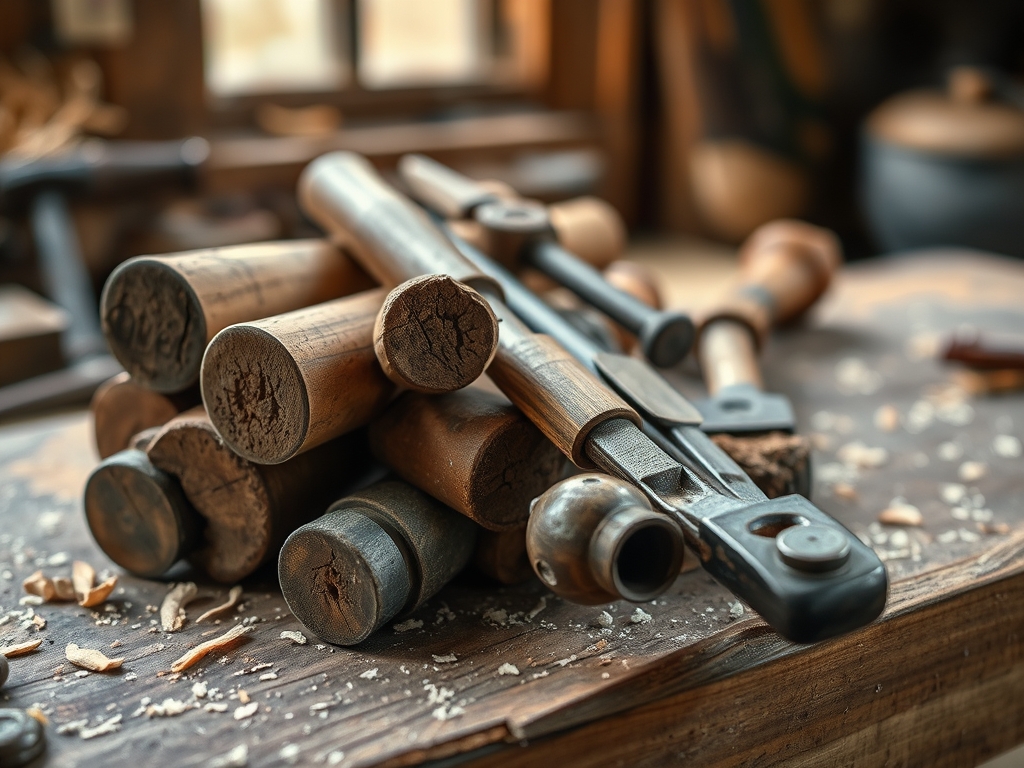
To find the music, you need a kit that balances brute force with surgical precision. Our primary material is a straight branch, preferably a non-porous hardwood like maple or a classic acoustic choice like cedar. You will need a set of calipers to measure the outer and inner diameters with sub-millimeter accuracy. A sharp drawknife or a high-carbon steel carving knife is essential for removing the bulk of the material, while a tapered reamer will help you smooth out the internal bore.
For the technical bits, grab a set of drill bits or a burning iron to create the finger holes. You will also need a block plane to flatten the "fipple" area where the air enters the instrument. If you are feeling fancy, a jeweler's saw is perfect for cutting the delicate window of the sound hole.
Material Substitutions: If you cannot find a solid branch, you can use two pieces of flat lumber and "sandwich" them together after routing out a channel. For a budget version, substitute the professional reamer with a long piece of dowel wrapped in progressively finer grit sandpaper. Instead of expensive oils, use food-grade mineral oil to burnish and seal the wood.
THE TEMPO
The "Maker's Rhythm" for a flute is slow and intentional. You cannot rush the desiccation of the wood. If you are working with green wood, the initial rough-out takes about two hours, but you must let it dry for weeks to prevent warping.
If you are starting with seasoned wood, the process follows a steady beat: The "Hollowing Phase" takes roughly three hours of focused physical labor. The "Voice Phase," where you carve the delicate air-splitting edge, is the most intense hour of the project. Finally, the "Tuning Phase" is a meditative two-hour session of incremental adjustments. Total active time is usually around eight to ten hours of hands-on craftsmanship.
THE CORE METHOD
1. Preparing the Bore
First, we must create the hollow center. Use your calipers to mark the center point on both ends of your branch. Using a long auger bit, drill from both ends to meet in the middle. This creates the primary acoustic chamber where the air column will vibrate.
Mastery Tip: Always drill with the grain direction to prevent the wood from splitting. Wood is essentially a bundle of straws; if you force a tool against the grain, you risk "tear-out," which ruins the internal laminar flow of the air.
2. Shaping the Fipple and Window
This is the heart of the flute. You must carve a flat "nest" on the top of the branch and cut a square hole, known as the window. One edge of this window must be carved into a razor-sharp "labium" or ramp. This edge is what splits the air to create sound.
Mastery Tip: The sharpness of the labium determines the clarity of the note. Use a fine-grit stone to hone this edge. If the edge is blunt, the air creates turbulence instead of a clean vibration, resulting in a breathy, weak tone.
3. Creating the Air Channel
You need a "block" or "bird" to sit on top of the nest. This piece directs a thin, flat stream of air directly at the labium edge. Use a chisel to carve a shallow, precise channel either in the block or on the flute body itself.
Mastery Tip: This channel relies on fluid dynamics. The channel must be perfectly smooth to ensure the air reaches the labium at a consistent velocity. Any burrs or rough spots will cause the flute to "overblow" or fail to speak entirely.
4. Tuning the Finger Holes
Once you have a steady "drone" note, it is time to add the holes. Start with the hole furthest from the mouthpiece. Drill a small pilot hole and check the pitch with a digital tuner. To raise the pitch, make the hole larger or move it closer to the mouthpiece.
Mastery Tip: Remember the law of displacement. A larger hole makes the flute "think" it is shorter, which raises the frequency. Use a conical reamer to enlarge holes slowly; you can always take wood away, but you cannot put it back.
5. Final Sanding and Sealing
Sand the exterior until it is smooth to the touch, moving from 120-grit up to 600-grit. Apply a coat of oil to protect the wood from the capillary action of moisture. When you breathe into the flute, the wood absorbs water; without a seal, the fibers will swell and crack the instrument.
Mastery Tip: Use a silk cloth to burnish the wood after oiling. The friction generates heat, which helps the oil penetrate deeper into the porous structure, creating a permanent moisture barrier.
THE TECHNICAL LEDGER
Maintenance & Longevity: To keep your flute in top shape, never store it in direct sunlight or near a heater. The rapid change in temperature causes the wood to expand and contract at different rates, leading to stress fractures. Swab the bore with a dry cloth after every playing session to remove condensation.
Material Variations:
- Sustainable: Bamboo is a fantastic "pre-hollowed" option that requires less drilling.
- Recycled: Old furniture legs made of mahogany or cherry offer incredible tonal richness.
- Premium: African Blackwood or Grenadilla provides the highest acoustic reflectivity for professional-grade sound.
The Correction:
- The "No-Sound" Glitch: Usually caused by a misaligned block. Ensure the air stream is hitting the labium edge perfectly.
- The "Squeak" Factor: This happens if the finger holes have "burrs" on the inside. Reach inside with a small file to smooth the internal edges.
- The "Flat Note": If a note is too low, the hole is too small. Use a round file to slightly enlarge the top edge of the hole.
Studio Organization: Store your flute horizontally in a padded case. This prevents any residual moisture from pooling at one end, which could cause the wood to rot or the structural integrity of the foot-joint to fail.
THE FINAL REVEAL
Look at that! You have successfully transformed a piece of the forest into a precision-engineered acoustic tool. The wood now has a soft, satiny luster from the burnishing process, and it feels balanced and ergonomic in your hands. When you play that first clear note, you aren't just hearing air; you are hearing the specific geometry of the wood you carved. It is a high-energy moment when the physics of the bore and the artistry of your hands finally click into place. You found the song!
STUDIO QUESTIONS
What is the best wood for a beginner flute?
Cedar is the gold standard for beginners. It is a soft hardwood that is easy to carve, smells incredible, and has excellent rot resistance. Its straight grain makes hollowing the bore much easier than knotted woods like oak.
How do I prevent the wood from cracking?
Seal the end-grain immediately after cutting the branch. Wood loses moisture fastest through the ends, which creates internal tension. Using wax or wood glue on the tips forces the moisture to evaporate slowly through the bark, preventing deep splits.
Why does my flute sound airy or breathy?
An airy sound usually indicates a "leak" in the air channel or a dull labium. Ensure the block is tied down tightly and the splitting edge is sharp enough to divide the air stream with minimal frictional resistance.
Do I need power tools for this project?
While a drill makes hollowing easier, you can use a hand-powered auger or even a burning rod. Manual tools give you more control over the material removal rate, which is safer for the wood's delicate structural integrity.