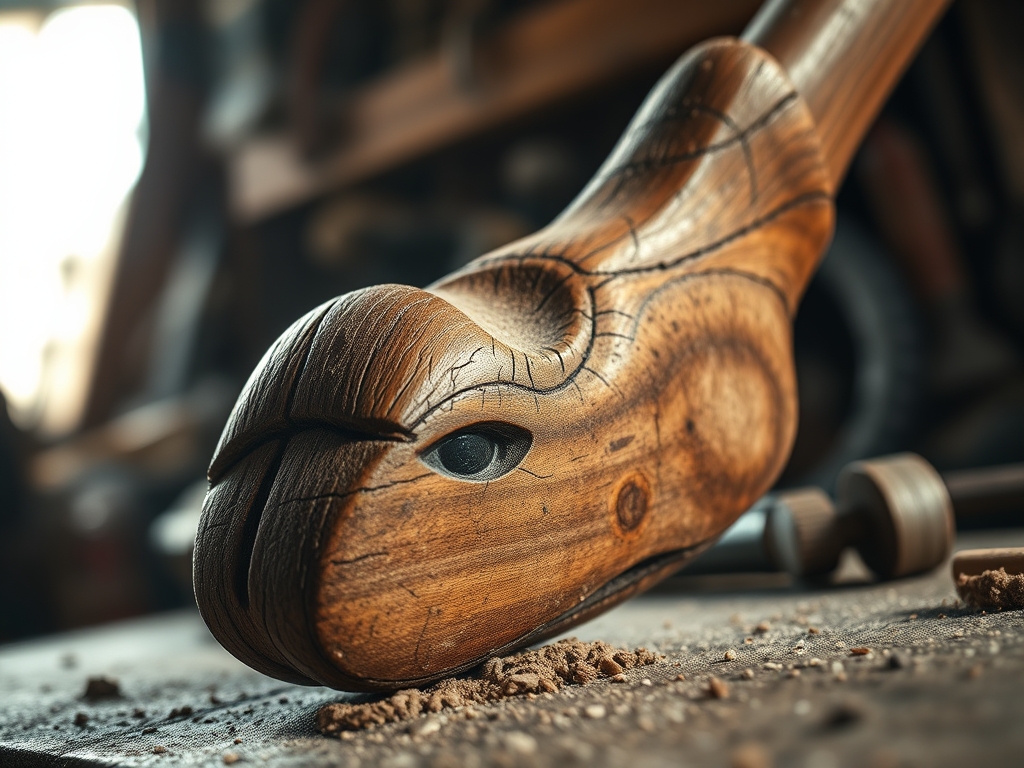

Grab your safety glasses and clear some space on the workbench because we are about to dive into the most satisfyingly difficult project in the woodshop. Carving a Wooden Chain is not just a craft; it is a high stakes puzzle where the prize is a continuous, interlocking masterpiece born from a single, solid block of timber. You can feel the potential energy stored in the grain as you run your thumb over the surface. We are looking for that perfect balance of tensile strength and workable softness. If you have ever wanted to prove your mastery over a blade, this is the moment where we turn a rigid rectangle into a fluid, rattling sequence of links. It requires a specific kind of mental gear shift. We are moving away from the fast paced world of power sanding and into the slow, meditative realm of precision hand tools. This is where we learn to listen to the wood, feeling for the exact moment the fibers give way to the steel.
THE STUDIO KIT
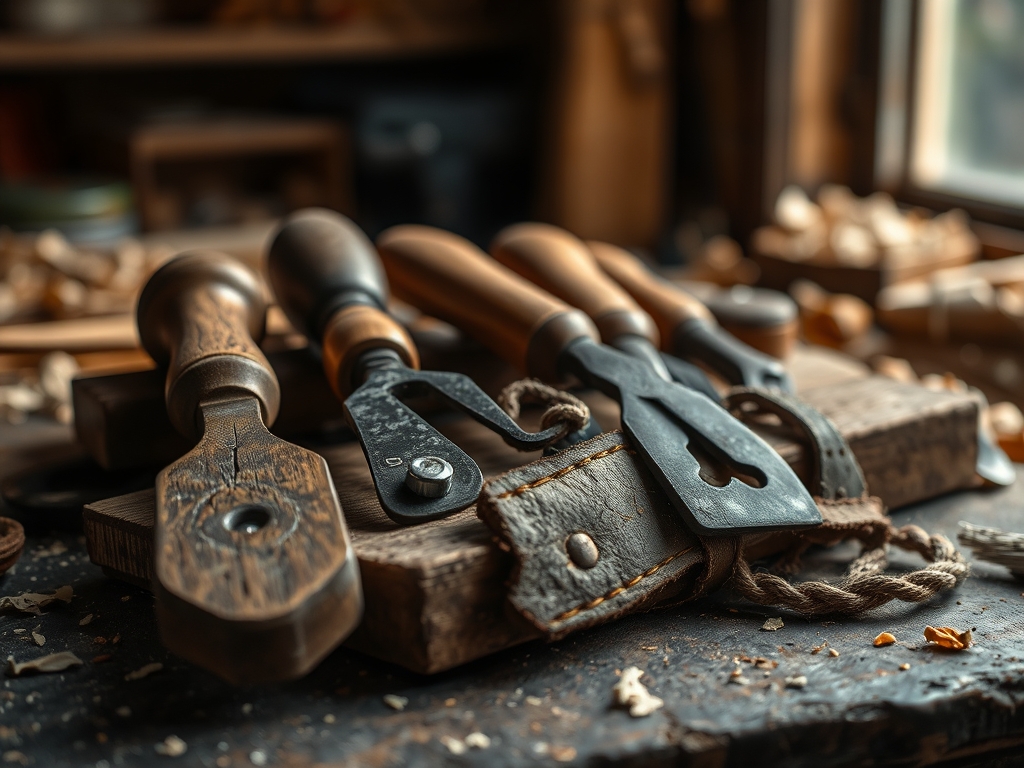
To succeed, you need a kit that respects the **cellular structure** of your medium. I recommend starting with a straight grained piece of Basswood or Butternut. These species have a low **Janka hardness rating**, meaning the fibers are easier to sever without causing major splintering or “breakout” on the back side of your cuts.
You will need a set of precision calipers to ensure your link thickness remains consistent to within a millimeter. A standard marking gauge is essential for scribing your layout lines deep into the wood fibers; this creates a physical "stop" for your knife. For the heavy lifting, a bench knife with a high carbon steel blade is your best friend. As we get into the delicate interior of the links, you will switch to a detail knife or a narrow chiseling awl to pop out the "windows" of the chain.
Material Substitutions: If you cannot find Basswood, look for White Pine. Avoid Oak or Hickory for your first attempt. The porous nature and high density of hardwoods make them prone to snapping along the grain lines when the links become thin. If you want a premium feel, Cherry offers a beautiful burnished finish, though it requires twice the sharpening frequency for your tools.
THE TEMPO
The "Maker's Rhythm" for a wooden chain is divided into three distinct movements. First is the Layout Phase, which takes about an hour of intense focus. This is where you calculate the geometry. Second is the Rough Out, which is the most physically demanding part. Expect to spend four to six hours removing the bulk material to reveal the "X" cross section. Finally, we enter the Separation Phase. This is the slowest, most delicate part of the process. It can take upwards of ten hours to carefully disconnect the links. Do not rush this. The structural integrity of the entire piece depends on your ability to maintain a steady, light pressure as the wood becomes increasingly fragile.
THE CORE METHOD
1. Scribing the Geometry
We start by marking a perfect "X" or cross shape on the ends of our wood block. Use your calipers to ensure the four arms of the cross are identical in width. These arms will eventually become the sides of your links. By scribing deep lines with a marking gauge, you are pre severing the surface fibers, which prevents the wood from "tearing" when you start the heavy carving.
Mastery Tip: This step relies on understanding grain directionality. By marking your lines parallel to the longitudinal tracheids (the long cells of the wood), you ensure that the finished links will have maximum strength along their length.
2. The Great Excavation
Now, we remove the four corners of the block to create a long, cross shaped beam. Use your bench knife to take long, thin shavings rather than deep chunks. This reduces the risk of the blade "diving" into the grain and ruining your dimensions. You want to reach a state where the "X" is perfectly symmetrical along the entire length of the wood.
Mastery Tip: This is about mechanical advantage. By keeping your blade at a 45 degree angle to the wood fibers, you are using a "slicing" motion rather than a "crushing" motion. This leaves a smoother surface and requires less force from your hands.
3. Mapping the Links
Once you have your cross, you must draw the overlapping links. This is a bit of a brain teaser. You are essentially drawing rectangles on each face of the cross, but they must alternate. Where one link is vertical, the next must be horizontal. Use a sharp pencil and double check your math. If the links do not overlap correctly, the chain will not move.
Mastery Tip: Remember spatial clearance. You must leave enough "meat" at the junction points to ensure the links don't snap during the separation phase. Usually, a 1:3 ratio of link thickness to link length is a safe bet for beginners.
4. The Window Cut
Using a detail knife, begin removing the wood from the center of each link. This is the "window." You will work from both sides, meeting in the middle. This requires a very sharp tip and a lot of patience. You are essentially hollowing out the heart of the block while leaving the outer frame intact.
Mastery Tip: This involves capillary action and moisture control. As you open the interior of the wood, the internal moisture levels change. Keep your hands clean and dry to prevent oils from staining the freshly exposed, porous interior fibers.
5. The Moment of Separation
This is the "make or break" step. You will carefully carve away the small bridge of wood that connects one link to the next inside the "X" junction. When the final fiber is cut, the link will drop and rattle. It is a magical sound. Continue this for every link until the entire chain is fluid.
Mastery Tip: This is a lesson in shear strength. You are applying force perpendicular to the grain. To prevent the link from snapping, always support the "receiving" link with your fingers so the pressure of the knife does not create a lever effect that snaps the wood.
THE TECHNICAL LEDGER
Maintenance & Longevity: Once carved, wood is susceptible to humidity. To prevent the links from swelling and locking up, apply a light coat of mineral oil or a beeswax finish. This seals the pores and provides a smooth, low friction surface for the links to slide against each other.
Material Variations:
- Sustainable: Reclaimed Cedar fence posts (soft but aromatic).
- Recycled: Old tool handles made of Ash (very tough, requires power tools for roughing).
- Premium: Black Walnut (stunning contrast, high tensile strength).
The Correction:
- The Snap: If a link breaks, do not panic. Use a high quality cyanoacrylate adhesive (CA glue) to bond the fibers back together. Once dry, sand the joint; it will be nearly invisible.
- The Bind: If links are too tight to move, use a narrow strip of high grit sandpaper (400+) to "floss" the interior of the links.
- The Rough Patch: If you have "fuzz" inside the links, use a small rotary tool with a buffing bit to smooth the hard to reach areas.
Studio Organization: Store your unfinished chain in a sealed plastic bag between carving sessions. This keeps the wood at a consistent moisture level, preventing the "checking" or cracking that happens when wood dries too quickly in a climate controlled studio.
THE FINAL REVEAL
Look at that! You have officially turned a boring piece of lumber into a kinetic sculpture. The way the links drape over your hand is a testament to your tool control and your understanding of wood anatomy. There is something incredibly "smart" about a wooden chain; it defies the viewer's expectation of what wood should do. It is no longer a stiff board; it is a textile made of timber. Give it a shake, listen to that rhythmic "clack," and take a second to appreciate the hours of focus you poured into those intersections. You didn't just make a chain; you mastered the grain.
STUDIO QUESTIONS
What is the best wood for a beginner?
Basswood is the gold standard for beginners. Its tight, consistent grain and low density allow for easy cutting with minimal resistance. This reduces hand fatigue and prevents the wood from splitting unexpectedly during the delicate separation phase of the links.
How do I keep my knives sharp enough?
Use a leather strop loaded with polishing compound every fifteen minutes of carving. Maintaining a polished, razor edge is easier than regrinding a dull one. A sharp blade requires less force, which significantly increases your safety and precision during intricate cuts.
Can I use power tools for this?
You can use a rotary tool or a small drill to clear the initial "windows" in the links. However, the final separation and shaping are best done with hand knives. Power tools move too quickly and can easily "catch" a grain line, shattering the link.
Why did my link snap during carving?
Snapping usually occurs because of "short grain" or applying too much leverage. If the grain runs diagonally across a link rather than lengthwise, it becomes structurally weak. Always support the wood directly behind your cut to neutralize any bending forces.
How do I finish the inside of the links?
The best method is "flossing" with thin strips of sandpaper. Cut a sheet of 220 grit into narrow ribbons and thread them through the links. Move the sandpaper back and forth to smooth the interior surfaces where your fingers cannot reach.