

Imagine the air in the studio thickening as the forge roars to life; it is a heavy, rhythmic pulse that you feel in your marrow before you hear it with your ears. We are not just playing with fire today. We are engaging in a high stakes negotiation with molecular structures to master the art of Forging a Metal Leaf from a rigid, stubborn rod of mild steel. You see, steel has this incredible personality. At room temperature, its crystalline lattice is locked tight, offering immense tensile strength that resists your every whim. But once we hit that glowing cherry red threshold, roughly fourteen hundred degrees Fahrenheit, the atoms begin to slide past one another. It becomes buttery, almost fluid, and entirely submissive to the hammer. This is the moment where industrial grit meets botanical grace. We are going to take a piece of industrial scrap and coax it into something that looks like it just drifted off an oak tree in mid autumn. Grab your safety glasses and your favorite heavy apron because we are about to turn cold hard logic into organic poetry.
THE STUDIO KIT
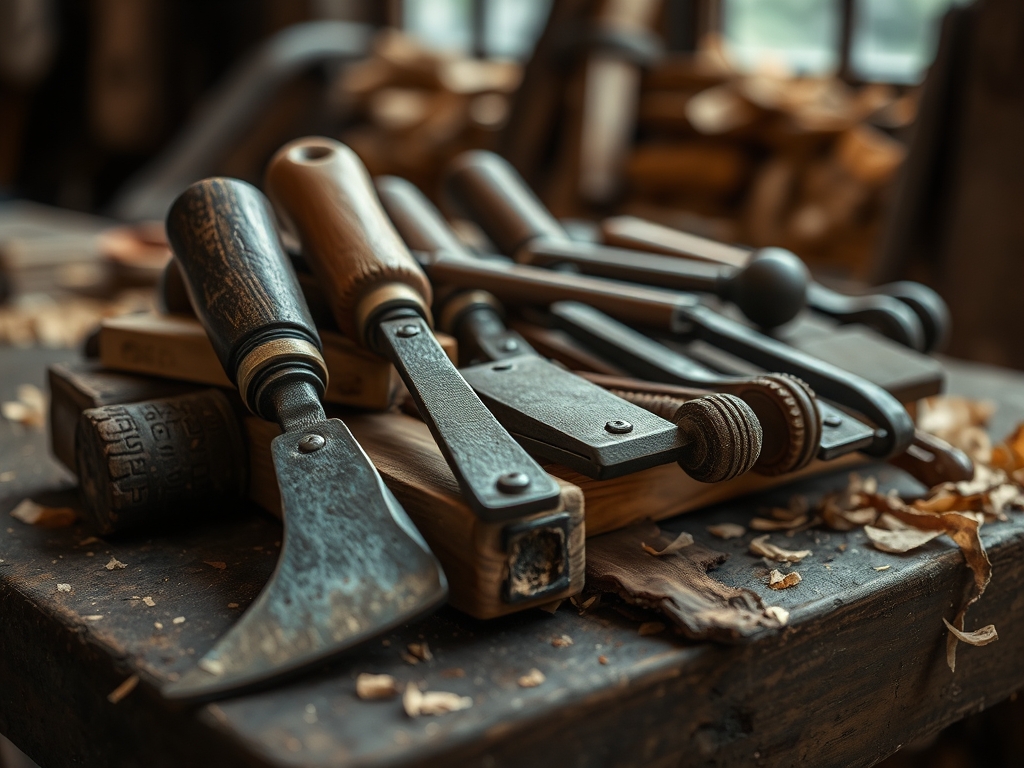
To transform a square bar into a delicate leaf, you need a kit that balances brute force with surgical precision. Our primary material is low carbon mild steel, specifically a three eighths inch square bar. This material is ideal because it possesses high ductility, meaning it can undergo significant plastic deformation before it actually ruptures. You will also need a two pound cross peen hammer. The flat face is for general moving of mass, while the peen is your primary sculpting tool for spreading the metal laterally.
Your anvil is the silent partner in this dance. Its mass provides the rebound energy necessary to move the steel efficiently. You will also require narrow jaw tongs to maintain a secure grip on your workpiece; if the steel wobbles, your energy transfer is lost. For the fine details, a hardy tool or a specialized veining chisel is essential to mimic the biological vascular system of a leaf.
Material Substitutions: If you cannot source mild steel, look for recycled wrought iron. It has a fibrous, woody grain due to the presence of silicate slag, which adds a gorgeous historical texture. For a premium version, use silicon bronze. It resists corrosion and has a lower melting point, though it work hardens much faster than steel and requires frequent annealing to prevent cracking.
THE TEMPO
Forging is governed by the Maker's Rhythm, a cycle of heating, striking, and observing. Each "heat" lasts about ninety seconds before the metal loses its plasticity and drops below the critical temperature. You cannot rush the thermal soak; the core of the metal must reach the same temperature as the surface to ensure uniform grain flow.
Expect to spend twenty minutes on the initial "tapering" phase, where you establish the stem and the leaf blank. The "spreading" phase takes another thirty minutes of rapid, rhythmic strikes. Finally, the "veining and detailing" phase requires a slower, more deliberate tempo of about fifteen minutes. Total active forging time usually lands around sixty to ninety minutes per leaf, depending on how much you obsess over the serrated edges.
THE CORE METHOD
1. Drawing the Taper
We begin by creating a long, square point on the end of our bar. This will eventually become the tip of the leaf. Use the "near side" of the anvil and strike with a slight angle to move the mass forward. Mastery Tip: This process relies on longitudinal displacement. By hitting the corners first, you are forcing the metal grains to elongate along the axis of the bar, which preserves the structural integrity of the tip so it does not become brittle and snap off during later stages.
2. Creating the Shoulders
Measure back about two inches from your point and use the edge of the anvil to "set in" the shoulders. This creates a distinct transition between the leaf body and the stem. Use the calipers to ensure your shoulder depths are symmetrical. Mastery Tip: This creates a stress riser if done too sharply. You must maintain a slight radius at the transition point to distribute the load, ensuring the stem can support the weight of the leaf without bending under its own gravity.
3. Spreading the Blade
This is where the magic happens. Reheat the blank to a bright orange and use the cross peen of your hammer. Strike down the center of the metal to push the material outward toward the edges. Mastery Tip: This technique utilizes lateral expansion. The peen acts like a wedge, concentrating the force into a narrow line that displaces the metal perpendicular to the hammer blow. This allows you to increase the surface area without thinning the spine of the leaf too much.
4. Refining the Profile
Once the width is established, switch back to the flat face of the hammer to smooth out the "peen marks" and refine the silhouette. You can use a jeweler's saw or a hot chisel to trim any ragged edges if you want a more manicured look. Mastery Tip: Pay attention to the thermal gradient. The thinner edges will cool much faster than the thick center. If you strike the edges when they are "black hot," you risk cold shuts or micro fractures in the steel lattice.
5. Veining and Texturing
Place the leaf flat on the anvil and use a dull chisel to drive the central vein and the secondary veins into the surface. Do not go too deep; you only want to suggest the organic pathways. Mastery Tip: This is essentially work hardening the surface in specific patterns. The compressed lines of the veins actually add a degree of structural rigidity to the thin leaf blade, preventing it from flopping or warping during the final cooling phase.
6. The Final Flourish
Give the leaf one last light heat and use your tongs to put a gentle twist in the stem and a slight curl in the tip. This breaks the symmetry and makes the piece look alive. Mastery Tip: This utilizes torsional stress. By twisting the metal while it is in a plastic state, you are reorienting the grain structure to hold a curve, which is much stronger than a piece that has been cold bent into shape.
THE TECHNICAL LEDGER
Maintenance & Longevity: Steel is prone to oxidation. Once the leaf is finished but still warm (around 400 degrees), rub it with a blend of beeswax and linseed oil. This creates a polymerized barrier that bonds to the surface, preventing moisture from reaching the iron atoms.
Material Variations: For a sustainable approach, use old coil springs from a vehicle. This is high carbon steel, which is much harder to move but results in a leaf that can be sharpened into a functional tool. For a luxury finish, use copper sheet and a repousse technique, which allows for extreme detail but lacks the ruggedness of forged steel.
The Correction:
- The Fish Tail: If the tip of your leaf splits, it is because you forged it too cold. Trim the split with an oscillating tool and reheat before continuing.
- The Paper Thin Edge: If the edge becomes too thin, it will burn in the forge. Fold the edge slightly over itself and hammer it back into the body to regain mass.
- The Off-Center Vein: If your chisel slips, do not try to erase it. Add more "random" texture to the leaf to make the mistake look like natural decay or insect damage.
Studio Organization: Store your finished leaves in a dry, low humidity environment. If you are storing raw steel bars, coat them in a light film of WD-40 or machine oil to prevent the formation of "mill scale" and deep pitting before you even start your project.
THE FINAL REVEAL
Look at that! You have successfully navigated the transition from a rigid industrial product to a fluid, organic form. The way the light catches the hammered facets of the leaf creates a sense of movement that a cast piece could never replicate. Your leaf has a tactile quality that begs to be touched; it is heavy enough to feel substantial but shaped with a delicacy that defies its origin. You have officially mastered the physics of heat and impact to create a permanent tribute to the fleeting beauty of nature.
STUDIO QUESTIONS
What is the best way to prevent the leaf from cracking?
Always maintain a bright red heat while forging. If the metal turns black, stop striking immediately. Steel becomes brittle at lower temperatures, and forced deformation at these levels causes the grain boundaries to tear, leading to irreversible structural failure.
Can I use a propane torch instead of a forge?
A standard plumbing torch lacks the BTUs to heat a three eighths inch bar effectively. You need a specialized forge or an oxy acetylene setup to reach the necessary temperatures for the metal to reach its plastic state throughout the core.
Why does my leaf look "scaly" after cooling?
That is mill scale, a layer of iron oxide that forms when hot steel reacts with oxygen. You can minimize this by maintaining a "reducing flame" in your forge and by frequently brushing the workpiece with a stiff wire brush.
How do I get a realistic curve in the stem?
Use the horn of the anvil to provide a consistent radius. By striking the metal over the curve of the horn, you distribute the bending force evenly, which prevents the stem from kinking or developing unsightly flat spots.