
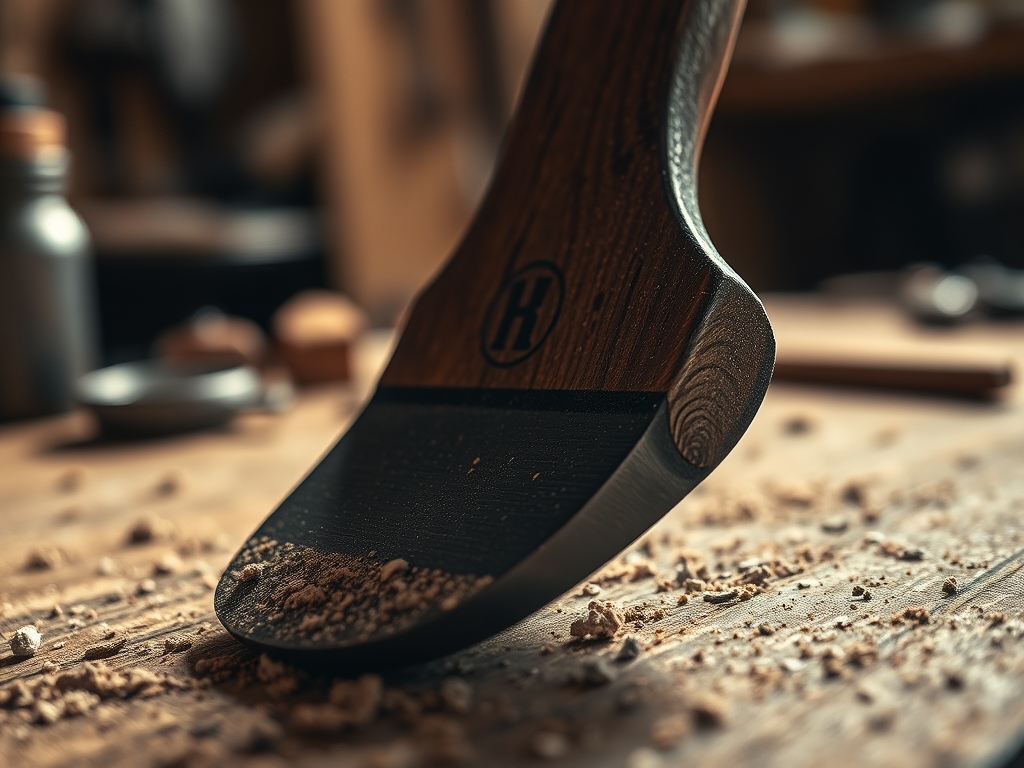
Close your eyes and imagine the sensory nightmare of a woodshop choked with fine white powder. Your lungs feel heavy; your goggles are clouded; and that high pitched whine of the random orbital sander is vibrating straight into your molars. Now, forget all of that. We are pivoting to a world of silent, surgical precision where the only sound is the crisp "shick" of a steel blade peeling back a microscopic layer of cellular structure. Using a Hand Scraper on Hardwood is the ultimate power move for a maker who values clarity over convenience. When you sand, you are essentially scratching the surface into submission, which often leaves the grain looking muddy or muted. A scraper works differently. It functions like a microscopic plane, shearing the wood fibers cleanly at the neck. This prevents the "pilling" effect seen in soft cellular structures and reveals the true, shimmering chatoyancy of the timber. We are going for a finish so smooth it feels like cold silk, achieved entirely through mechanical shearing rather than abrasive friction. It is tactile magic backed by pure physics.
THE STUDIO KIT
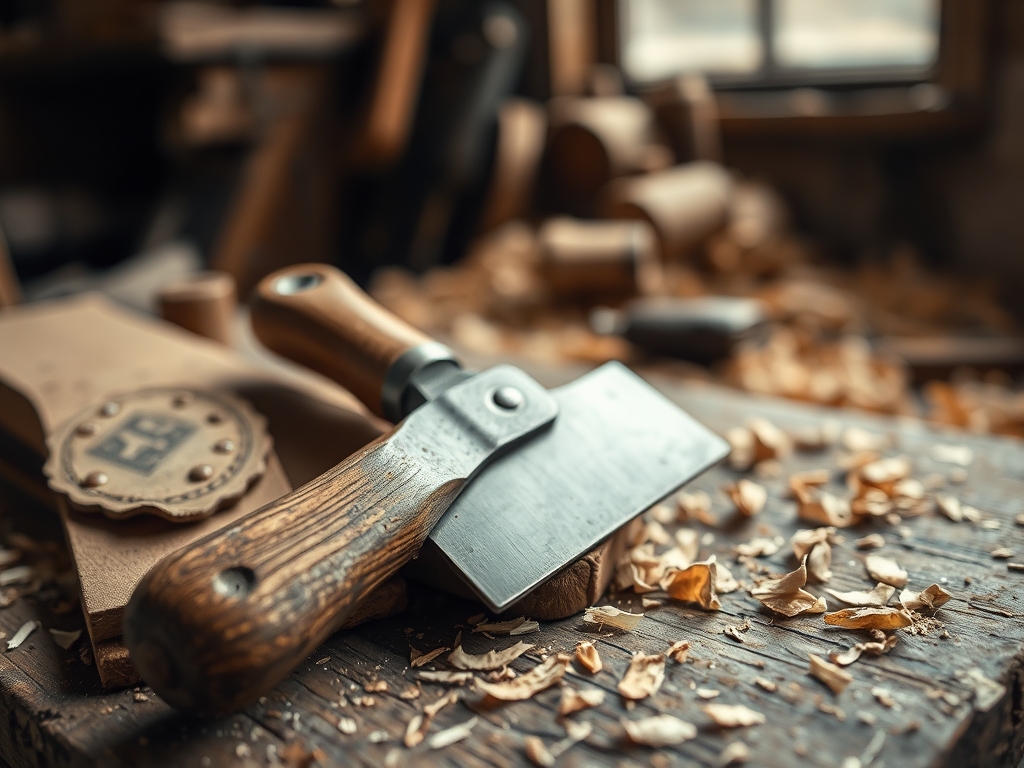
To master this technique, you need a kit that respects the tensile strength of high carbon steel. The star of the show is the cabinet scraper, a simple rectangular plate of tool steel, usually around 0.8mm to 1mm in thickness. You will also need a burnisher, which is a highly polished, hardened steel rod used to "turn the hook" or create the cutting edge. Do not use a screwdriver for this; the steel must be harder than the scraper itself to avoid marring. You will also require a fine cut mill file to square the edges and a set of whetstones (1000 and 4000 grit) to polish the faces.
For material substitutions, if you cannot find a dedicated burnisher, a solid tungsten carbide rod works beautifully due to its extreme density. If you are working on contoured surfaces like a chair back, swap the rectangular plate for a gooseneck scraper. This allows you to maintain consistent contact patches on concave curves. Always keep a pair of calipers nearby to check for thickness uniformity across your workpiece, especially if you are working with thin veneers where the margin for error is razor thin.
THE TEMPO
The "Maker's Rhythm" for scraping is vastly different from the mindless back and forth of sanding. It is a high intensity, short duration activity. You should expect to spend about 15 minutes on tool preparation (the "honing phase") for every 45 minutes of active scraping. The actual material removal happens fast. Because you are not stopping to change sandpaper grits, you save significant time in the long run.
The rhythm is a steady, rhythmic push or pull. You will feel the tool heat up due to kinetic friction; this is your signal to shift your hand position or take a momentary break to prevent the steel from losing its temper. A standard tabletop can be fully surfaced in about two hours of focused work, leaving a finish that requires zero cleanup and is immediately ready for oil or lacquer.
THE CORE METHOD
1. Squaring the Edge
Before you can cut, you must prepare the substrate. Secure the scraper in a padded vise and use your mill file to grind the long edge perfectly flat and square to the faces. This removes the old, dull hook and creates a fresh 90 degree platform. Check your progress with a small machinist square to ensure you are not tilting the file, which would create an uneven cutting pressure.
Mastery Tip: The science here involves structural integrity. By filing the edge flat, you are ensuring that the subsequent "hook" you create has a uniform base, preventing the blade from chattering or "skipping" across the wood pores.
2. Honing the Faces
Lay the scraper flat on your 1000 grit whetstone. Apply even pressure and polish the area near the edge until it shines like a mirror. Flip it and repeat. Then, move to the 4000 grit stone. This removes the "wire edge" left by the file and prepares the steel at a molecular level for the burnishing process.
Mastery Tip: This step addresses surface tension. A polished face reduces the friction between the wood shaving and the tool, allowing the "chip" to curl away effortlessly rather than clogging the cutting edge.
3. Turning the Hook
Hold the scraper vertically and rub the burnisher along the edge at a 90 degree angle with heavy pressure. This "draws" the steel upward. Then, tilt the burnisher slightly (about 5 to 10 degrees) and make two or three firm passes. This rolls that drawn steel over into a microscopic hook. This hook is what actually does the cutting.
Mastery Tip: This is a display of ductility. You are literally moving the steel without breaking it. The hook acts as a tiny, continuous chisel that shears wood fibers at a specific shear angle, resulting in a cleaner cut than any abrasive could provide.
4. The Active Shear
Grasp the scraper with both hands, placing your thumbs in the center and bowing the metal slightly. Tilt the tool forward until the hook catches the wood. Push or pull in long, continuous strokes following the grain direction. You should see thin, lace like shavings, not dust. If you see dust, your hook is gone and it is time to re burnish.
Mastery Tip: The bowing of the scraper is essential for load distribution. It ensures that the corners of the tool do not dig into the wood, which would create "tracks" or gouges that are difficult to remove later.
THE TECHNICAL LEDGER
Maintenance & Longevity: Steel scrapers are virtually immortal if kept dry. Store them in a tool roll made of oiled canvas to prevent oxidation. If you notice any pitting on the faces, you must grind past the corrosion to reach fresh steel, as rust will crumble the delicate hook during the burnishing phase.
Material Variations:
- Sustainable: Use scrapers on reclaimed oak or elm; the tool excels at leveling uneven grain found in recycled timbers.
- Premium: On exotic hardwoods like Ebony or Cocobolo, a scraper is mandatory. These woods have high oil content that clogs sandpaper instantly, but a scraper shears through the oils without gumming up.
The Correction:
- The Chatter Mark: If the tool bounces, you are holding it at too steep an angle. Lower the tilt and increase the "bow" in the plate.
- The Dull Patch: If one section stops cutting, you likely have a flat spot on your hook. Re burnish that specific area with a single, firm stroke.
- The Thumb Burn: Scrapers get hot! If it becomes uncomfortable, use a magnetic scraper holder or a piece of leather to insulate your thumbs.
Studio Organization: Store your scrapers vertically in a slotted wooden block. This protects the delicate hooks from touching other metal tools, which would instantly dull the edge. Label each scraper by its thickness (gauge) so you can quickly grab the stiffest one for heavy leveling or the thinnest one for final smoothing.
THE FINAL REVEAL
Step back and look at that surface! Without a single grain of dust in the air, you have transformed a rough plank into a shimmering masterpiece. The light hits the wood and bounces back with a depth that sanding simply cannot replicate. Because the pores are cleanly sheared rather than filled with dust, your oil finish will penetrate deeper and more evenly. It is a professional, high end look that screams "master craftswoman." You did that with a simple piece of steel and a lot of physics.
STUDIO QUESTIONS
Why is my scraper producing dust instead of shavings?
Your hook is either worn down or was never properly turned. Re file the edge to a perfect 90 degrees and use more pressure with your burnisher to properly roll the steel edge over into a cutting hook.
Can I use a hand scraper on plywood or veneers?
Yes, but exercise extreme caution. Veneers are often only 0.6mm thick. Use a very light touch and a highly flexible scraper to avoid "burning through" the top layer and exposing the glue or substrate underneath.
How do I know when the scraper is too hot?
If the metal becomes uncomfortable to hold, the heat can theoretically affect the steel's temper over time. More importantly, it causes the wood fibers to compress rather than cut. Take a break or use a heat sink.
Is a scraper better than a smoothing plane?
A scraper is superior for difficult, interlocking grain where a plane might cause "tear out." While a plane removes more material faster, the scraper provides the final, flawless surface finish on problematic hardwoods.